

Most couples get so caught up in booking the venue and finalizing the guest list that the invitation timeline sneaks up on them. And then suddenly it is four weeks before the wedding and someone's aunt in Toronto still has not received anything and the panic sets in. Getting the timing right sounds simple but has more layers to it than most planning guides will tell you, especially if you are planning an Indian wedding with guests scattered across multiple countries and multiple events happening over several days.
Six to eight weeks before the wedding is the standard window for sending formal invitations, but for most Indian weddings, and particularly for diaspora families planning celebrations in the US, UK, Canada, or Australia, that window needs to open much earlier. Here is how to think through the full timeline in a way that actually works for your situation.
Start With the Save the Date, Not the Invitation
Before you even think about the formal invitation, there is a step that most couples either skip or do too late, and that is the save the date. For a large Indian wedding with guests flying in from London, Delhi, Dubai, and New Jersey all at the same time, the save the date is what determines whether the people you love most can actually show up.
Send save the dates six to eight months before the wedding for guests traveling within the same country, and eight to ten months before for international guests. If your wedding falls during a popular travel season around Diwali, Christmas, or the summer holidays, push it even earlier because flights book up fast and your guests will need time to arrange visas, take leave from work, and plan their travel comfortably rather than in a rush.
A save the date does not need every detail. It just needs the date, the city or country, and a signal that the formal invitation is on its way. That is enough for someone to block their calendar and start thinking about flights. Think of it as the announcement. The invitation is the full story.
The Formal Invitation Timeline
Once your save the dates are out, the formal invitation gives guests everything they need. This includes the date, time, and venue for each event, accommodation information for traveling guests, dress code guidance for each function, and any cultural notes that help non-Indian guests feel prepared rather than lost.

For a local wedding where most guests are nearby, six to eight weeks before the wedding is perfectly fine. It gives people enough time to RSVP, arrange childcare or work schedules, and show up without stress. But for multi-day Indian weddings with international guests, the timeline shifts. For guests traveling from abroad, sending formal invitations ten to twelve weeks in advance is a much safer approach, and many planners who specialize in Indian diaspora weddings will tell you that three to four months is not too early when your event involves serious travel logistics.
The reason this matters so much is that Indian weddings are not single-event occasions. You are not just asking someone to show up on a Saturday evening. You might be asking them to clear an entire week, book hotel rooms, arrange for their children to stay with someone, and navigate an international flight. The earlier they have the full details, the more likely they are to genuinely commit rather than saying they will try and then quietly backing out because it all became too complicated.
Why the Indian Wedding Context Is Different
Most generic advice about invitation timing is written for a single-day Western wedding with a mostly local guest list. That advice does not translate to an Indian wedding cleanly. The structure of a typical Indian wedding, which can include a mehndi, haldi, sangeet, the main ceremony, and a reception, means you are managing multiple events with different guest lists, different venues sometimes, and different emotional significance attached to each one.
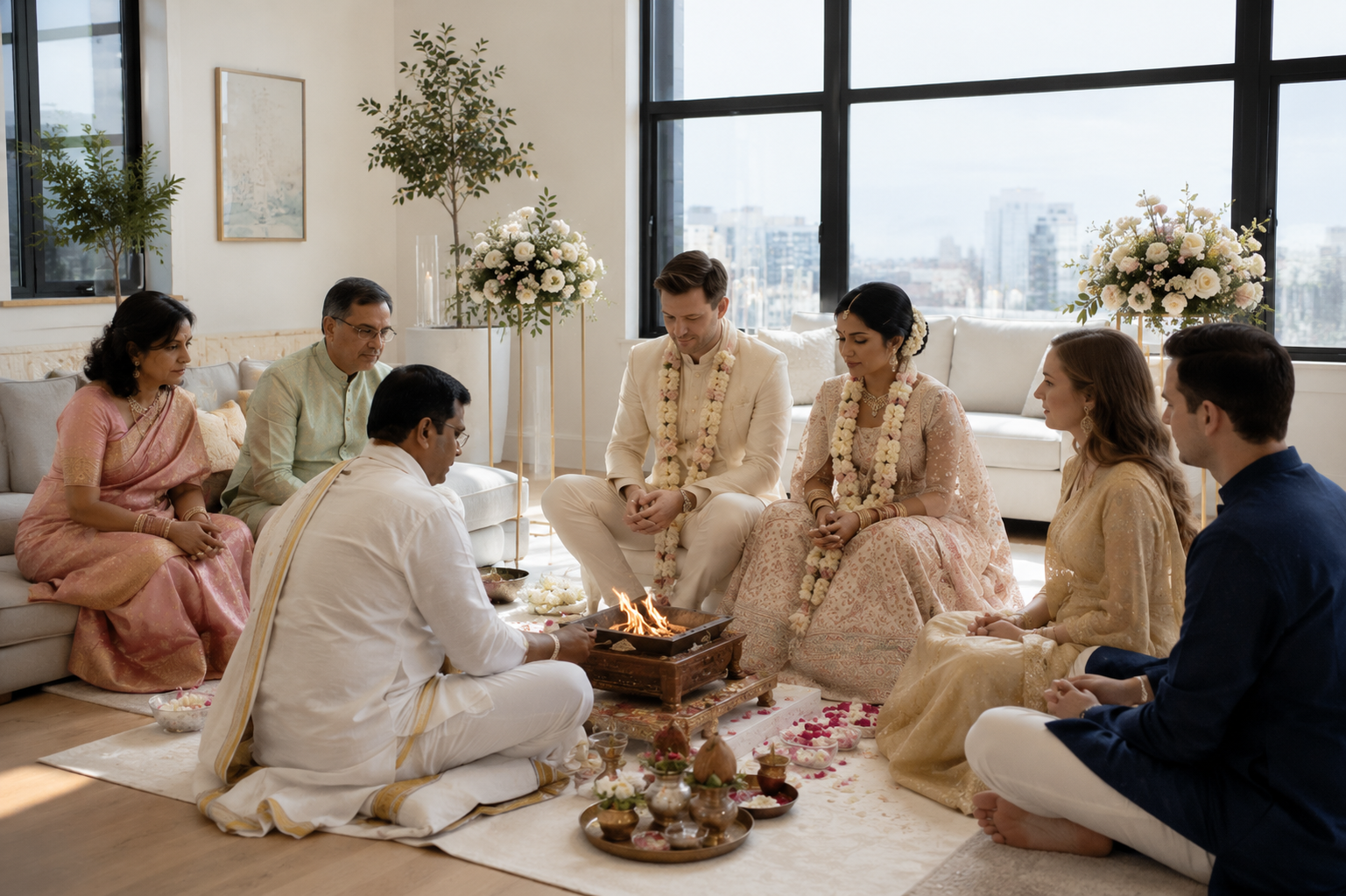
Guests flying in from another country need to know which events they are invited to, how those events are sequenced across the days, what to wear to each one, and where to be and when. If they find out all of this six weeks before, they are already scrambling. If they find out three to four months before, they can plan a trip that feels organized and something to look forward to rather than stressful and last-minute.
There is also the RSVP side of this, which matters practically far more than most couples expect. Your caterer, venue, and decorator all need accurate headcounts well before the wedding day. For multi-event Indian weddings, asking for RSVPs eight to ten weeks before your first event gives you the buffer to follow up with stragglers, update vendor numbers, and finalize logistics without everything collapsing in the final stretch.
Digital vs Physical Invitations and How Timing Changes
Physical invitations, especially the beautifully crafted multi-layered kind that Indian weddings are known for, take time to design, print, assemble, and ship. Add international delivery into the mix and you are looking at potential delays, customs holds, and the occasional invitation that never arrives at all. When you account for all of that, you need to start working on physical invitations four to six months before the wedding just to ensure they reach people on time.
Digital invitations change this significantly. They arrive instantly, can be updated if plans change, make RSVP tracking far easier, and work across borders without any delivery uncertainty. Many couples today use a hybrid approach where they send digital save the dates and formal invitations for the practical benefits, and then send beautifully designed physical invitations to close family as keepsakes. This combines the efficiency of digital with the emotional weight of something tangible that a grandmother can hold in her hands.
If you are going fully digital, you have a little more flexibility on timing, but do not use that flexibility as an excuse to send invitations later than you should. The reason for sending invitations early has never been only about delivery time. It has always been about giving people space to plan, to get excited, and to feel like they were genuinely thought of in advance.
The Guest-Level Detail Problem Unique to Indian Weddings
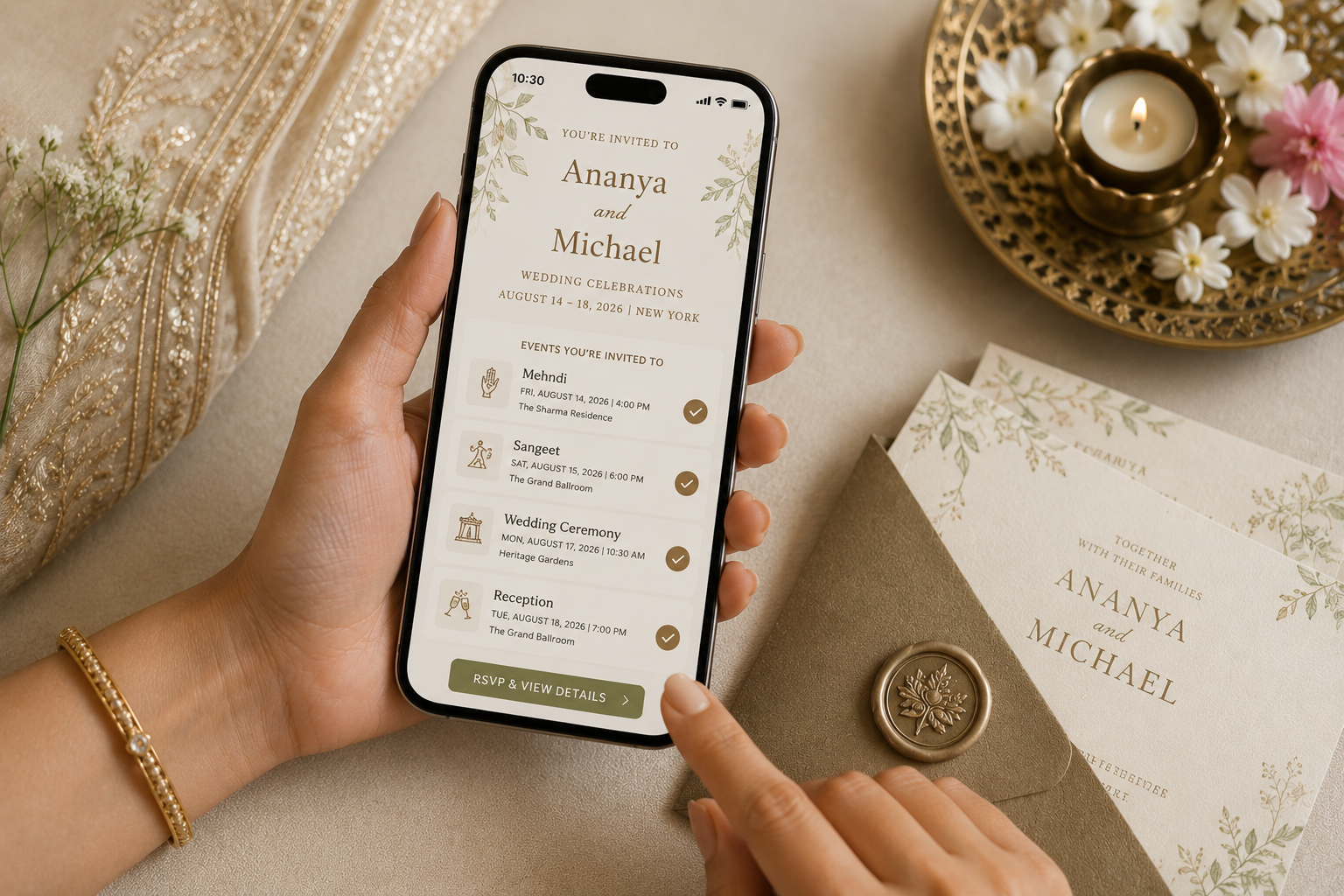
There is one challenge that Indian weddings face that most invitation guides never address, and that is the question of which guests are invited to which events. In a large Indian wedding, the mehndi might be for the bride's close female family and friends. The sangeet might extend to both families. The ceremony might be restricted to a certain number while the reception opens to a wider circle. Not every guest is invited to every event, and communicating that clearly without anyone feeling left out or inadvertently offended is genuinely tricky.
A well-structured digital invitation system solves this cleanly. Rather than sending one blanket invitation and hoping guests figure out which events apply to them, you can send each guest information only about the functions they are invited to. This avoids confusion, prevents guests from showing up to intimate events they were not meant to attend, and makes the experience feel personal and thoughtful rather than like a mass mailing.
A Practical Timeline to Follow
Lock your date and venue first because nothing moves until those are confirmed. Once the date is set, work backwards. For significant international guests, save the dates go out eight to ten months before. For guests within the same country, six to eight months works well.
Formal invitations should reach international guests three to four months before the wedding, and local guests six to eight weeks before. Set your RSVP deadline four weeks before your first event for local weddings, and eight to ten weeks before for destination or international weddings. Always send a reminder to guests who have not responded within two weeks of the invitation going out, because life gets busy and even the most enthusiastic guests forget to reply.
What Timing Really Communicates
When you send your invitation early, you are not just managing logistics. You are telling your guests that their presence matters enough for you to have thought about them months in advance. For someone flying across the world to celebrate with you, that is one of the most genuinely thoughtful things you can do. An invitation that arrives with plenty of notice says this wedding is organized, this family cares, and you matter enough that we planned around you. That feeling starts the celebration long before the first ceremony begins.
Frequently Asked Questions
When should I send wedding invitations for an Indian wedding abroad?
Send save the dates eight to ten months before for international guests, and formal invitations three to four months before. For local guests, six to eight weeks before the wedding date works well.
How early is too early to send a wedding invitation?
There is no such thing as too early for a save the date. For formal invitations, three to four months is the practical early limit for international guests. Sending much earlier than that can mean guests lose the details before the excitement builds again.
Should I send the same invitation to all guests regardless of which events they are attending?
Ideally no. For Indian weddings with multiple functions and different guest lists per event, sending each guest only the information relevant to their events avoids confusion and makes the experience feel more intentional.
What is the right RSVP deadline for a multi-event Indian wedding?
For local guests, four weeks before your first event. For international guests or destination weddings, eight to ten weeks before so you have time to coordinate accommodation, travel, and vendor headcounts without last-minute chaos.
What if my guest list changes after I have already sent invitations through Indivites?
You can update your guest list, add new guests, or change event details at any point without starting over. If something changes, guests who check their invitation link see the updated information automatically. For large Indian weddings where the guest list almost always shifts between the first draft and the final count, this flexibility makes a real practical difference.
Is it okay to send digital invitations for an Indian wedding?
Absolutely. For diaspora weddings with guests across multiple countries, digital invitations are often the more practical and reliable choice. Many couples combine digital invitations with physical ones sent to close family as a keepsake.
What should I include in an Indian wedding invitation for international guests?
Beyond the standard date, time, and venue, include accommodation details, dress code guidance for each event, a clear note on which events they are invited to, and a link to a wedding website where they can find the full schedule and travel information in one place.
What happens if I send invitations too late?
Late invitations for international guests often result in lower attendance, guests who feel stressed rather than excited, and vendors without accurate headcounts in time to prepare. For large Indian weddings especially, late invitations can genuinely change who shows up, and that is very difficult to undo.