
Every Diwali host has the same two moments. The first is two weeks before, when you feel calm and organized and slightly smug. The second is an hour before the first guest arrives, when you’re standing in the kitchen holding a diya and wondering where all the matchsticks went.
This checklist is for turning the first feeling into the second without the panic. It covers the invitation, the pooja, the RSVPs, the relatives who can’t be there in person, the rangoli, the food and the morning after. Take what helps and skip the rest.
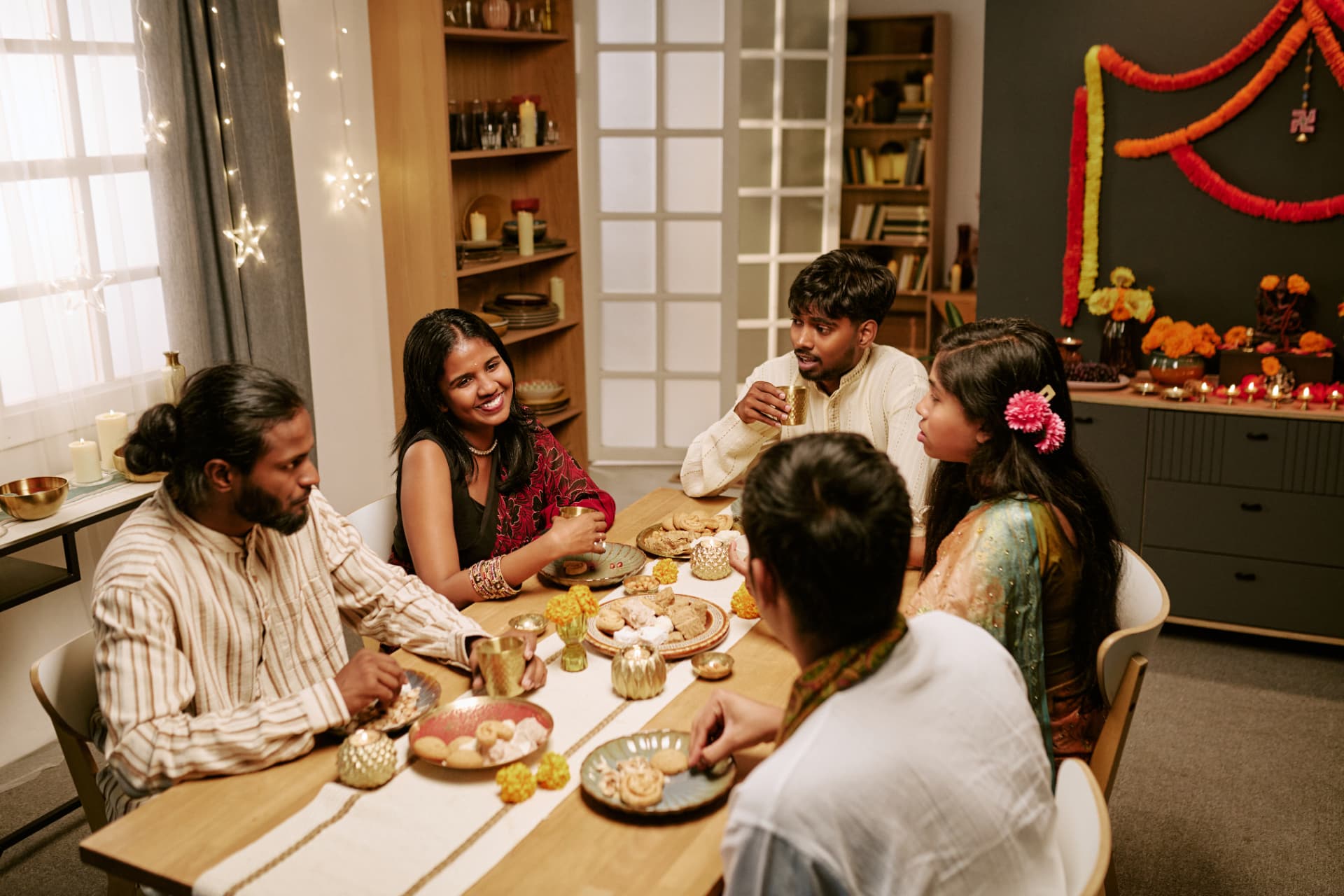
How far ahead should you plan a Diwali party?
About two to three weeks is comfortable. Less is doable, just busier. Here’s how it breaks down.
Two to three weeks before
- Pick your date and time. If you’re doing a pooja, check the muhurat with your pandit, your family or a panchang first, because everything else works around it.
- Make the guest list. Include neighbors, friends, family and the one cousin who will definitely ask if there’s chai.
- Send the invitations (more on those below).
- Order sweets or the ingredients for your faral.
- Buy diyas, tealights, flowers and rangoli colors before the good ones run out.
One week before
- Chase the RSVPs from people who haven’t answered.
- Clean the house properly, including the corner by the front door that everyone sees.
- Do a rough seating plan. Floor cushions, chairs, a couple of stools for elders.
- If relatives abroad are joining on video, test the link now, not five minutes before aarti.
Two to three days before
- Make anything that keeps well: chakli, chivda, shankarpali, laddoos.
- Buy fresh flowers and mango leaves.
- Practice your rangoli design on paper. Nobody wants to discover at 6 pm that the peacock looks like a potato.
On the day
- Rangoli at the entrance, diyas lit, puja thali ready.
- Chai on, music on, shoes sorted out near the door.
- Someone in charge of photos. It shouldn’t be you.
What should a Diwali party invitation say?
Say what’s happening, when, where and what guests should expect. That’s the whole job. The rest is tone. If it’s a party with snacks and chai, keep it relaxed: “Come celebrate Diwali with us! Faral, chai and lots of catching up. Saturday, 5 pm. Please RSVP by Wednesday.”
If a pooja is part of the evening, say so clearly, so people know when to arrive. A Ganesh Pujan invitation works well here, since people traditionally pray to Ganesh at the start of any auspicious occasion. Try: “Join us for Ganesh Pujan and Diwali celebrations at our home. Pooja at 6 pm, aarti at 7 pm and prasad and dinner afterward. We’d love to have you with us. Please RSVP by Wednesday.”
For a more formal Hindu ritual invitation, keep the language respectful and simple. Include the name of the ceremony, the date and time, the address, whether people should come in traditional wear (optional is usually welcome) and whether shoes come off at the door. Guests new to a pooja will appreciate that last one.
Why send a digital pooja invitation?
Because it saves you from the group chat spiral. You know how it goes: you send the address, someone asks again, someone else wants the time, and your invitation is buried under 83 messages.
A digital pooja invitation keeps the date, time, address, pooja schedule and RSVP link in one place. You can send it by WhatsApp, text or email, and anyone can find the details again in two seconds. It also looks nicer than a screenshot of a typed message, which is a real feature.
How do you handle online RSVPs for a pooja?
An online RSVP for a pooja is the easiest way to know how many people to plan for, and for a pooja, it matters more than for a regular party. You need to know how much prasad to make, how much food to cook and how many people will be sitting on the floor in your living room.
A few things make it work:
- Set an RSVP date three or four days before the event, so you still have time to buy and cook.
- Ask about dietary needs while you’re at it. Some guests avoid onion and garlic, and a Diwali menu is a good place to be considerate.
- Ask how many are coming per household, kids included.
- Follow up with the quiet ones. A friendly “are you able to make it?” works better than silence and guessing.
How do you invite relatives abroad?
You can’t fit your aunt in Toronto into your living room, but you can still bring her to the aarti.
Here’s how to invite relatives abroad so they feel included.
- Send the invitation early. People in other time zones need extra notice to plan their evening.
- Give the time in their time zone. Don’t make them do the math. “Aarti at 7 pm here, which is 8 pm for you” is a kind line to add.
- Add a video link. Include a call or livestream link in the invitation, and note the aarti time so they can join for that part.
- Check the camera angle. Put a phone or laptop where they can see the pooja thali, not the back of someone’s head.
- Share photos afterward. A quick message with pictures of the rangoli and the food means a lot to someone watching from far away.
Digital invitations help here, because one link reaches everyone, whether they’re ten minutes down the road or ten time zones away.
How do you make rangoli without stress?
Start simple. A circle with petals and a diya at the center looks beautiful, and almost nobody regrets starting there.
- Sketch the design on the floor with chalk first. It’s much easier to fix chalk than powder.
- Use rangoli colors, rice flour or flower petals, whatever you have.
- Work from the center out so you don't step on finished parts.
- Let the kids add the final touches. It won’t be perfect, and that’s fine.
- Keep diyas away from curtains, sleeves and small hands, and keep a few battery tealights as a backup.
If your entrance is small, a stencil or a pre-made sticker rangoli is no shame. Your guests will admire it anyway.
What food do you serve at a Diwali party at home?
You don’t need a banquet. Faral snacks, sweets and chai cover most of an evening and if there’s a pooja, then prasad. If dinner is on the menu, keep it to a few dishes you can make ahead.
A simple spread: chakli, chivda, shankarpali, a couple of mithai, fruit and plenty of chai. If you’re serving a meal after the pooja, make it something that holds well on the stove while you’re doing the aarti. Nobody wants to cook mid-pooja.
Buying some of the sweets is completely fine. You’ll thank yourself at 4 pm.
What else makes the evening feel like Diwali?
A playlist, fairy lights, flowers at the door and a spot for photos. If kids are coming, give them something to do: a rangoli corner, a diya-painting table or a small treasure hunt. If adults want to play cards, that’s a Diwali tradition in many homes, so let them.
Where does Indivites fit?
Indivites started as a place to plan Indian weddings, and its tagline is “where modern weddings come alive.” It’s built for South Asian and multicultural weddings, with digital invites, RSVPs, Shagun and themes for Hindu, Sikh and Muslim celebrations.
The same things that make wedding invitations easy- a good-looking design, one link for all the details, and an RSVP you can track- work just as well for a Diwali party or a pooja. Create your invitation with Indivites, and you’ll know where to go when a bigger celebration comes around.
Frequently asked questions
How do I host a Diwali party at home?
Start about two to three weeks out. Pick a date, send the invitations, sort the food and decorations, and leave the pooja setup and rangoli for the last day or two. Make a short list for each stage and tick things off. That’s what keeps the day itself calm.
What is a Ganesh Pujan invitation?
It’s the invite to a prayer for Lord Ganesha, who’s traditionally honored first at any auspicious occasion. Include the date, time, address, and when the pooja and aarti begin so people know when to arrive. Add an RSVP date so you can plan the prasad.
What should a Hindu ritual invitation say?
Name the ceremony, then give the date, time and address. Mention the pooja and aarti timings, and whether guests should take their shoes off or dress traditionally. Keep the wording respectful and short. Someone who has never been to a pooja will appreciate you spelling it out.
What is a digital pooja invitation?
It’s the pooja invite you send on WhatsApp, text or email as a link, instead of a printed card. The time, address, aarti schedule and RSVP all sit in one place, so nobody has to scroll back through the group chat to find the address again.
How do I set up an online RSVP for a pooja?
Put an RSVP link in your digital invitation and ask for a reply a few days before the event, early enough that you can still shop and cook. Ask how many people are coming from each household and whether anyone has food restrictions. Then you’ll know how much prasad to make, and you won’t be guessing at 5 pm.
How can I invite relatives abroad to my Diwali pooja?
Send the invitation early, and write the time in their time zone so they don’t have to work it out. Share a video link and tell them when the aarti starts so that they can join for that part. Afterward, send a few photos of the rangoli and the food. That’s usually what they remember.
How early should I send Diwali invitations?
Two to three weeks is comfortable for guests nearby. If relatives are overseas, send them a little earlier so they can fit the call around their own evening.
What’s the easiest rangoli for beginners?
A circle, a ring of petals and a diya in the middle. Draw it in chalk first so you can fix mistakes, then fill it in from the center outward. And hand the kids a pinch of color. It’ll look a bit wonky, which is part of the charm.
Can I use Indivites for a pooja or a Diwali party?
Indivites is mostly built for weddings, with digital invites and RSVPs for South Asian celebrations. But a good-looking invite and easy RSVPs work for any gathering, including a pooja or a Diwali party.