
Choosing a wedding platform rarely feels like a major decision at the moment, yet it quietly shapes much of what follows. The platform a couple selects determines how invitations are sent, how guests respond, how each event is organised, and how gifts are received. By the time the celebration arrives, that early choice has decided which parts of the process feel effortless and which become a source of daily friction. For Indian American families, this decision carries particular weight, because the wedding they are planning differs in structure and spirit from the celebrations most platforms were designed to support. It is a multi day event, the guest list is often divided between the United States and India, and it carries traditions that have no direct equivalent in a Western celebration. With that context in mind, it is worth examining how Indivites and Zola each approach the work of planning a wedding, and why the differences between them matter.
What Each Platform Was Truly Built For
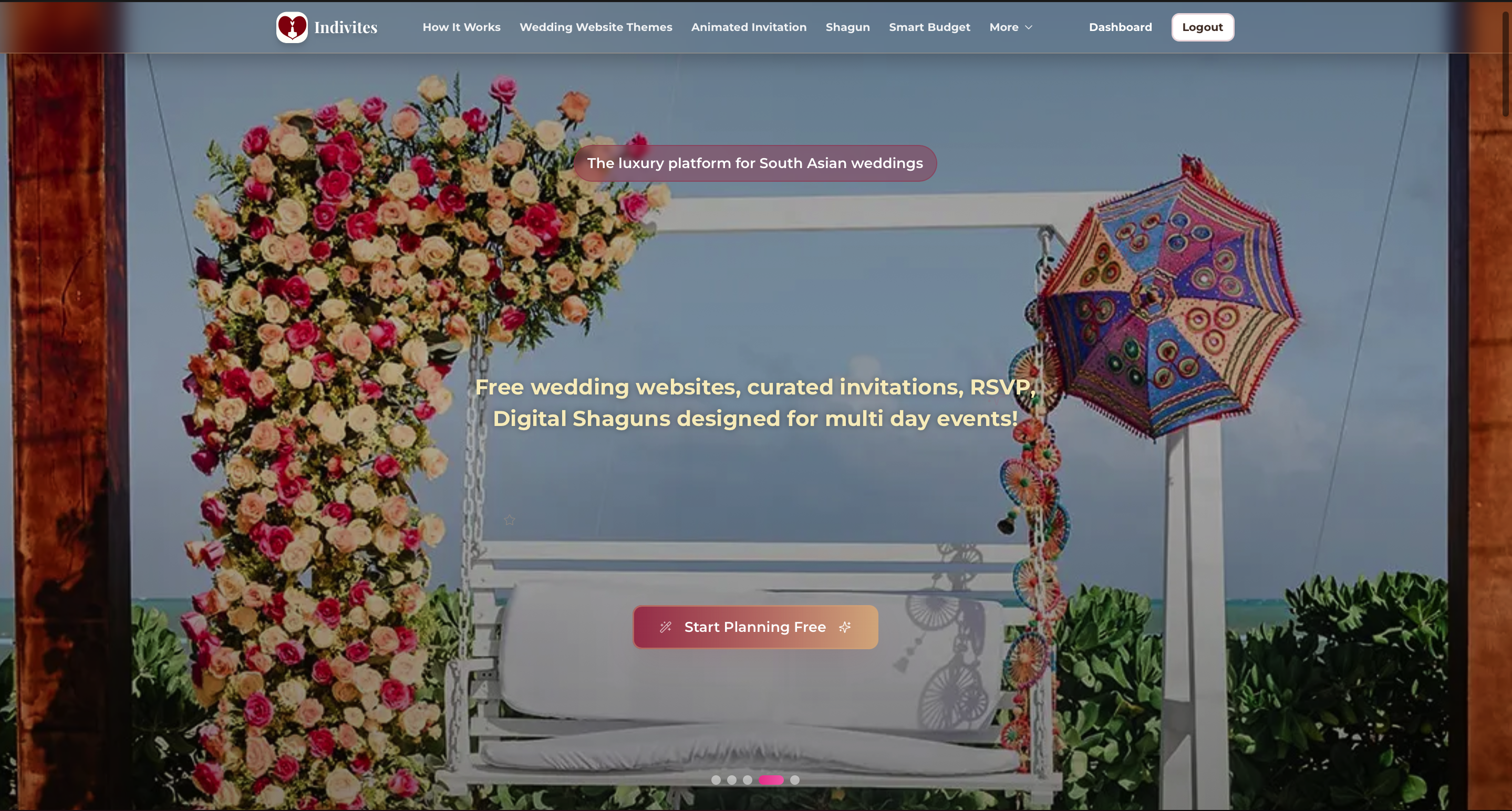
Every product reflects an assumption about the customer it serves. Zola was built around the Western wedding, which is typically centred on a single main day supported by a few surrounding events, and it serves that vision with considerable polish. It is used by millions of couples and is widely regarded as one of the most refined wedding platforms in the United States. Indivites was built around a different assumption entirely. It was designed for the Indian wedding, which unfolds across several distinct functions such as the haldi, the mehndi, the sangeet, the ceremony, and the reception, each with its own guests, its own atmosphere, and its own significance. This difference in starting point is the reason the two platforms diverge so clearly once a wedding becomes more complex than a single day.
The practical consequence is straightforward. On Zola, a couple planning multiple Indian functions must arrange them around a structure intended for one central event. On Indivites, each function is treated as a complete event in its own right, so the platform already reflects the shape of the celebration. When the software matches the way the family is actually planning, the work becomes simpler and the chance of confusion falls.
Sending Invitations Across Two Countries
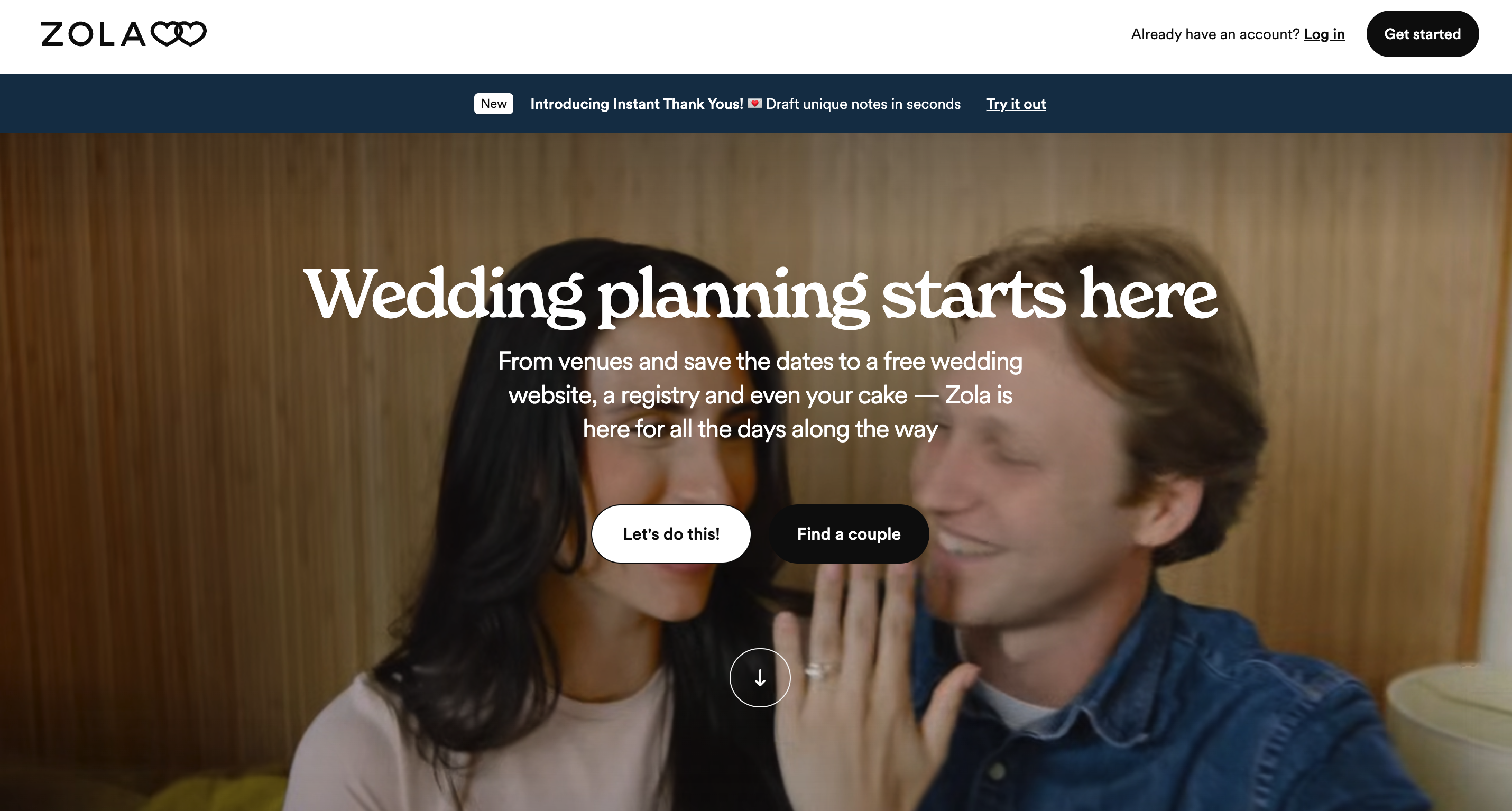
Invitations are the first point at which the two platforms part ways in a meaningful manner. Zola is well known for its stationery, and its designs are genuinely beautiful. However, its own help documentation confirms that it does not currently offer full digital wedding invitations. It provides digital save the dates and a wide range of printed paper invitations, which suit a wedding where most guests live in one country and can receive post easily.
Indivites takes a digital first approach to invitations. Its invitations are designed to be customised in detail, made culturally specific, and shared instantly, which means a relative in India receives the same invitation at the same moment as a guest living nearby. This removes the cost and delay of international postage and avoids the need to reprint when details change, which they often do during planning. For a guest list spread across two countries, the ability to deliver a polished invitation to everyone at once is a clear and practical advantage. In simple terms, Zola excels at invitations you can hold in your hand, while Indivites is built for invitations that can travel anywhere instantly.
Showing Each Guest Only Their Own Events
Both platforms allow a couple to decide who is invited to which event, and Zola offers reliable controls for this purpose. The distinction lies in how far that idea is carried. Indivites is built around guest level visibility, which means each guest sees only the events they have personally been invited to, and nothing else. This may sound like a minor technical detail, but in an Indian wedding it solves a genuinely sensitive problem.
Consider a common situation. The parents invite two hundred family friends to the reception, while the mehndi is kept small and private. A group of college friends attends the sangeet but not the religious ceremony, and a parent's work colleagues are welcome only at the reception. When these overlapping circles are not handled carefully, a guest can easily see a function they were not invited to, which creates the kind of awkwardness that families remember long afterwards. On Indivites, this cannot happen, because every guest sees a version of the wedding tailored to their own invitations. Zola allows a couple to control invitations event by event, and Indivites extends the same principle into the everyday experience of each guest, which makes it especially well suited to a large and multi generational guest list.
Collecting Replies for Every Function
Knowing how many people will attend each function is essential for catering, seating, and budgeting, and both platforms handle replies competently. Zola offers a strong online RSVP system with automatic tallies, reminders, and the ability for a household to reply on behalf of a group. Indivites provides comparable RSVP tools, and because it treats every function as a separate event, it gathers a separate and accurate count for each one. A guest who is attending the sangeet but not the ceremony is recorded exactly where they belong, so the numbers for every function remain clean and reliable. For a wedding made up of several distinct gatherings rather than one, this separation makes a genuinely complex task far easier to manage.
Receiving Gift and the Tradition of Shagun
Gifting is where the cultural difference between the two platforms is most visible. Zola helped popularise the universal registry, which allows couples to combine gifts from any store with cash funds and honeymoon contributions. It is elegant and works very well for a couple setting up a home in the Western tradition.
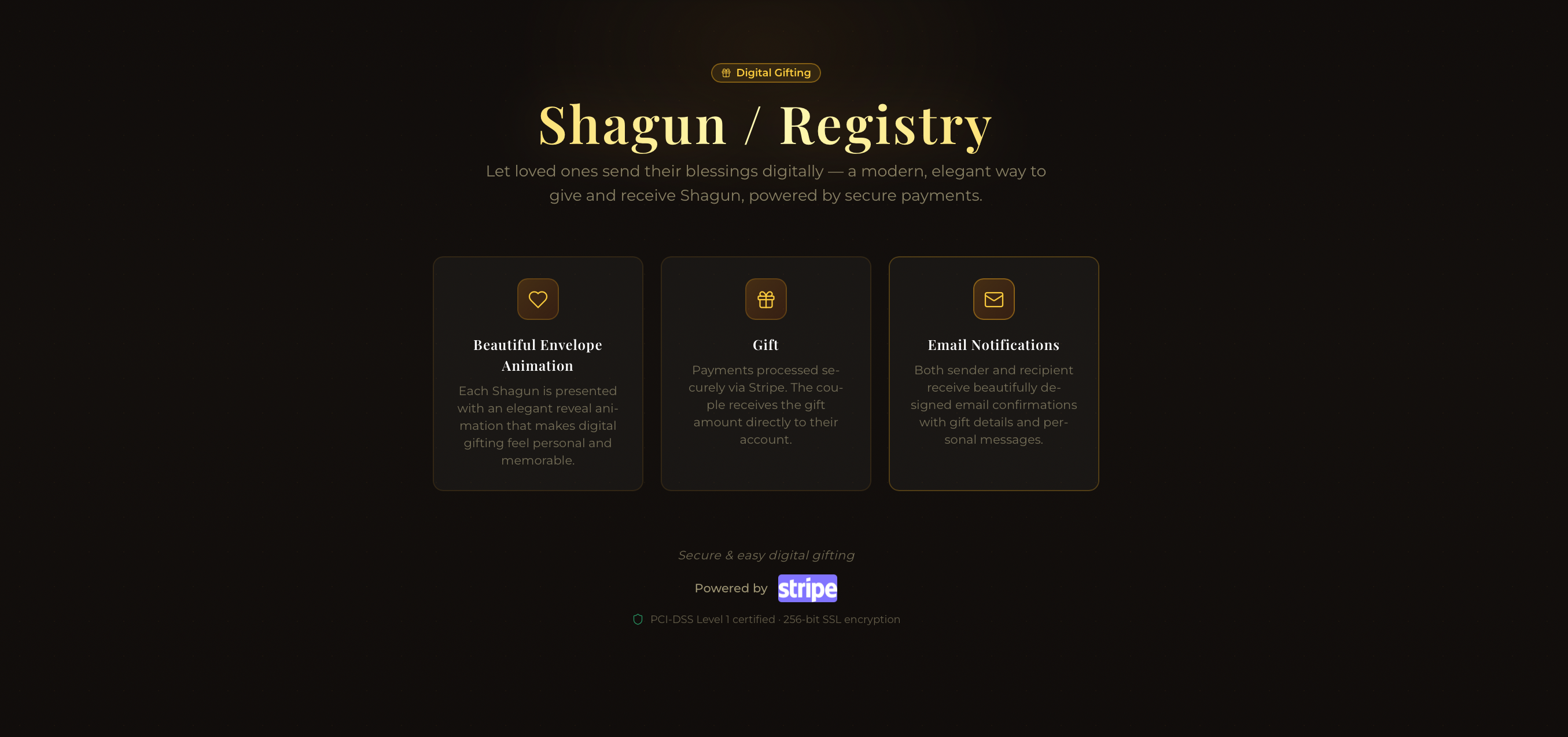
Indian weddings, however, often involve Shagun, which follows a different logic. Shagun is not a list of chosen items but a blessing given in an envelope, a gesture passed down across generations, and it is frequently offered to the parents of the couple rather than the couple themselves, in recognition of the family's role in the celebration. A registry of selected household goods has no natural way to express this. Indivites addresses it directly by bringing Shagun online through digital gifting envelopes, allowing a guest to send their blessing to either the couple or their parents. An uncle in India who cannot attend a wedding in the United States can still offer Shagun to the bride's father, and the gesture keeps its full meaning despite the distance. In plain terms, Zola is built around a registry of things, while Indivites is built to carry a tradition that a registry was never designed to hold.
Building a Website for the Whole Celebration
A wedding website gathers all the information guests need in one place, and both platforms offer one. Zola's website templates are widely admired for their visual polish, and for a single day wedding they are difficult to better on appearance alone. Indivites builds its website around the same multi event structure and guest visibility that run through the rest of the platform, so the site naturally reflects a layered celebration and shows each guest only the events relevant to them. The difference is one of purpose rather than quality. Zola presents one beautiful day with great refinement, while Indivites quietly manages a complex, multi-function wedding in the background, which is a different and more involved task.
Two Platforms Built for Two Different Weddings
A simple summary makes the comparison clear.
Service
Indivites
Zola
Digital invitations
Digital invitation platform by design, shared across borders instantly
Digital save the dates and printed invitations, no full digital invitation suite
Multiple events
Every function treated as a complete event
Supported as additions around a main day
Event visibility
Each guest sees only the events they are invited to
Invitation controls for each event
Replies and counts
A separate, accurate count for every function
Strong online RSVP with automatic tallies
Gifting
Digital Shagun, offered to the couple or their parents
Universal registry of items and cash funds
Wedding website
Built around multiple events and guest visibility
Highly polished templates
What the comparison ultimately reveals is the kind of wedding each platform imagined when it was created. Zola imagined a single, beautiful Western day, and it serves that vision with genuine skill and refinement. Indivites imagined the layered, multi day celebration shared between two countries that defines so many Indian American weddings, and it was shaped around both the practical demands and the emotional meaning of that celebration. For a family planning a haldi, a mehndi, and a sangeet across different time zones, that difference in design is felt in countless small moments throughout the planning process, well before the first guest arrives.
Frequently Asked Questions
1. What is the main difference between Indivites and Zola? Zola is built around the single-day Western wedding, while Indivites is built for the multi-day Indian wedding, treating each function like the haldi, mehndi, sangeet, ceremony, and reception as its own complete event with its own guests.
2. Does Zola offer digital wedding invitations? Per Zola's own help documentation, it does not offer full digital wedding invitations. It provides digital save-the-dates and a range of printed paper invitations, which suit weddings where most guests live in one country.
3. Can a wedding platform show different guests different events? Yes, but the depth varies. Both platforms let couples control who is invited to which event, while Indivites carries it further with guest-level visibility, so each guest sees only the events they are personally invited to.
4. How does Indivites handle Shagun? Indivites brings Shagun online through digital gifting envelopes, letting a guest send their blessing to either the couple or their parents, so a relative who cannot attend in person can still take part in the tradition across any distance.
5. Is Indivites a good choice for an Indian wedding with guests in both India and the US? Yes. Indivites is designed for exactly that, with instantly shareable digital invitations, per-function RSVP counts, and a website that reflects the full multi-day celebration, all built for a guest list split across two countries.