
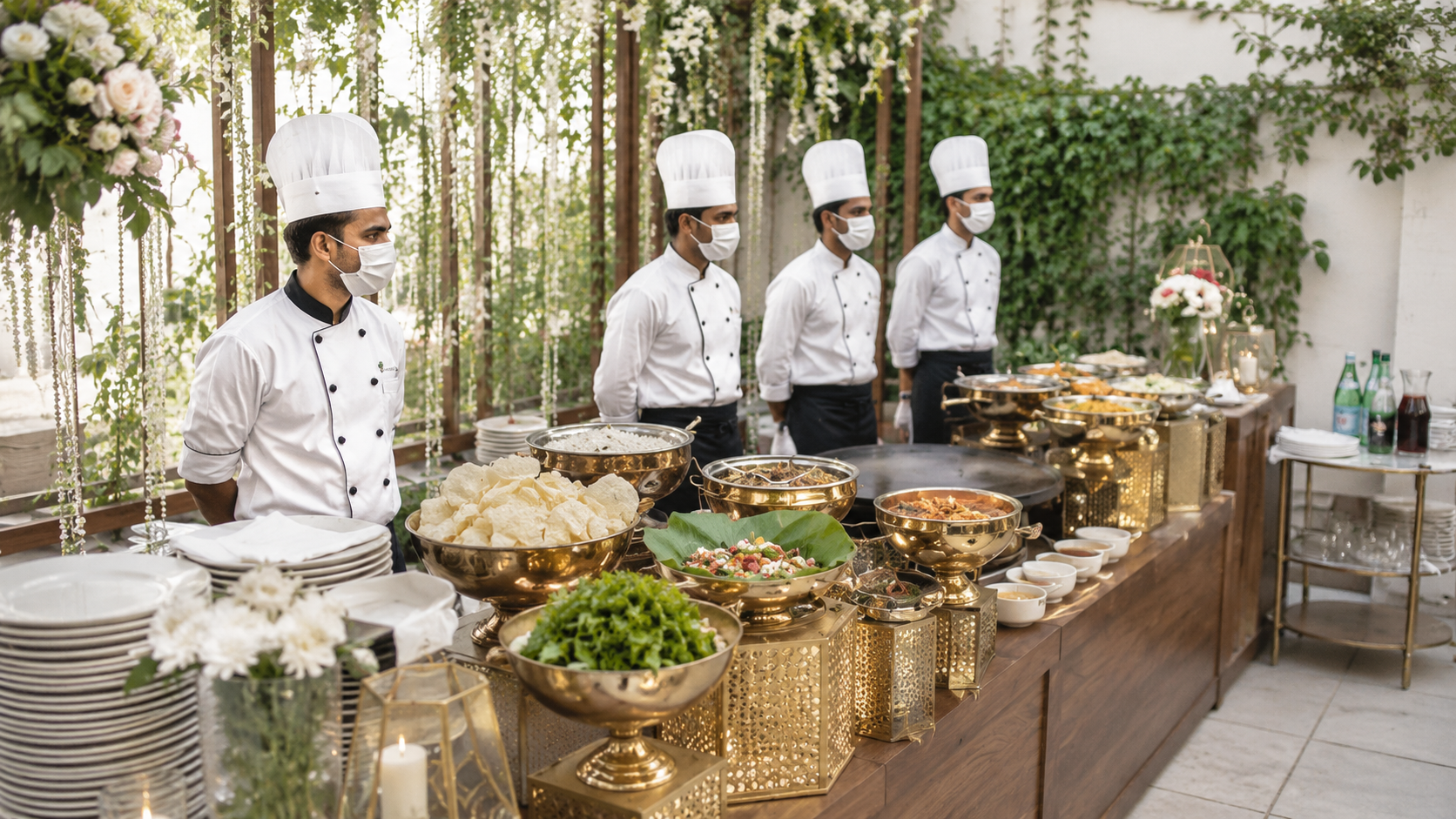
Catering is the single largest line item in most Indian wedding budgets. For Indian families planning weddings in the US, full catering for a 300-guest wedding runs anywhere from $25,000 to $45,000 for a buffet setup, and premium catering with live stations can climb to $80,000 or more. Per plate costs in major US cities typically range from $75 to $150 per guest, and some premium caterers in New York or Los Angeles charge $200 to $300 per head. At those numbers, even a modest error in your headcount is not a small thing. Paying for 50 guests who do not show up at $100 per plate is $5,000 gone before the first dish is served.
The uncomfortable truth is that most Indian wedding couples overpay their caterers by a meaningful amount, and the reason almost always comes down to one thing. They did not have accurate RSVP data when they finalized their numbers.
How Headcount Errors Happen and Why They Are So Common
The problem is not that couples do not try to get accurate numbers. Most do. The problem is that the tools they use to collect RSVPs are not built for the complexity of a large Indian wedding with guests across multiple countries and multiple events.
When RSVPs are collected through a WhatsApp group, a manual spreadsheet, or a combination of both, the final headcount is always an estimate with a confidence problem. Some guests confirm verbally but never officially respond. Some say yes and then do not show up. Some say no and then turn up with two family members in tow. And because the couple is managing all of this manually, the number they give the caterer is often inflated as a buffer against uncertainty rather than based on actual confirmed data.
A 10% overestimation on a 400-guest wedding at $100 per plate is $4,000 in wasted catering. On a 500-guest wedding, that number climbs higher. And this is before accounting for the per-event complexity of an Indian wedding, where the mehndi, haldi, sangeet, ceremony, and reception all have different guest lists and different headcounts that need to be tracked separately. One inaccurate number across five events compounds quickly into a significant budget problem.
What Real-Time RSVP Tracking Actually Changes

Real-time RSVP tracking means that the moment a guest responds to their invitation, their confirmation updates the couple's headcount instantly and automatically. There is no manual entry, no chasing messages, no reconciling a spreadsheet against a WhatsApp thread at eleven at night. The couple opens their dashboard and sees exactly how many people have confirmed for each event, how many have declined, and how many have not yet responded.
This changes the catering conversation fundamentally. Instead of calling the caterer with a rough estimate six weeks before the wedding and hoping it is close, the couple can give increasingly accurate numbers as RSVPs come in and make a final, data-backed confirmation at the deadline. When that conversation is based on a real-time dashboard rather than a mental calculation, the numbers are tighter and the budget stays where it should be.
The difference between quoting a caterer on invited count versus confirmed count is one of the most commonly cited budget traps in Indian wedding planning. Some caterers quote on the number of people invited, others on confirmed attendance, and the difference on a 350-person event can be anywhere from $5,000 to $15,000 depending on the per-plate rate. Knowing your confirmed numbers precisely, per event, gives you leverage in that conversation and protects you from the most expensive version of that discrepancy.
Per-Event Tracking Is Where the Real Savings Happen
For a single-event Western wedding, RSVP tracking is relatively straightforward. One event, one headcount, one caterer conversation. For an Indian wedding with five functions, each with a different guest list, the tracking challenge multiplies and so does the budget risk if it goes wrong.
The mehndi might have 80 confirmed guests. The haldi might have 40. The sangeet might have 250. The ceremony might be 300 and the reception 350. Each of these is a separate catering arrangement with a separate cost. If the sangeet headcount is off by 30 guests, that is thousands of dollars in food prepared for people who are not coming. If the reception number is underestimated, you risk running out of food for guests who flew in from three countries.
Per-event RSVP tracking, where each guest confirms per function rather than for the whole wedding, gives you a separate and accurate headcount for each event well before the catering deadline. This is the kind of precision that the WhatsApp and spreadsheet approach simply cannot provide, because guests are confirming across different chat threads, different messages, and different time zones with no unified view of who has said what for which event.
When to Give Your Caterer Final Numbers
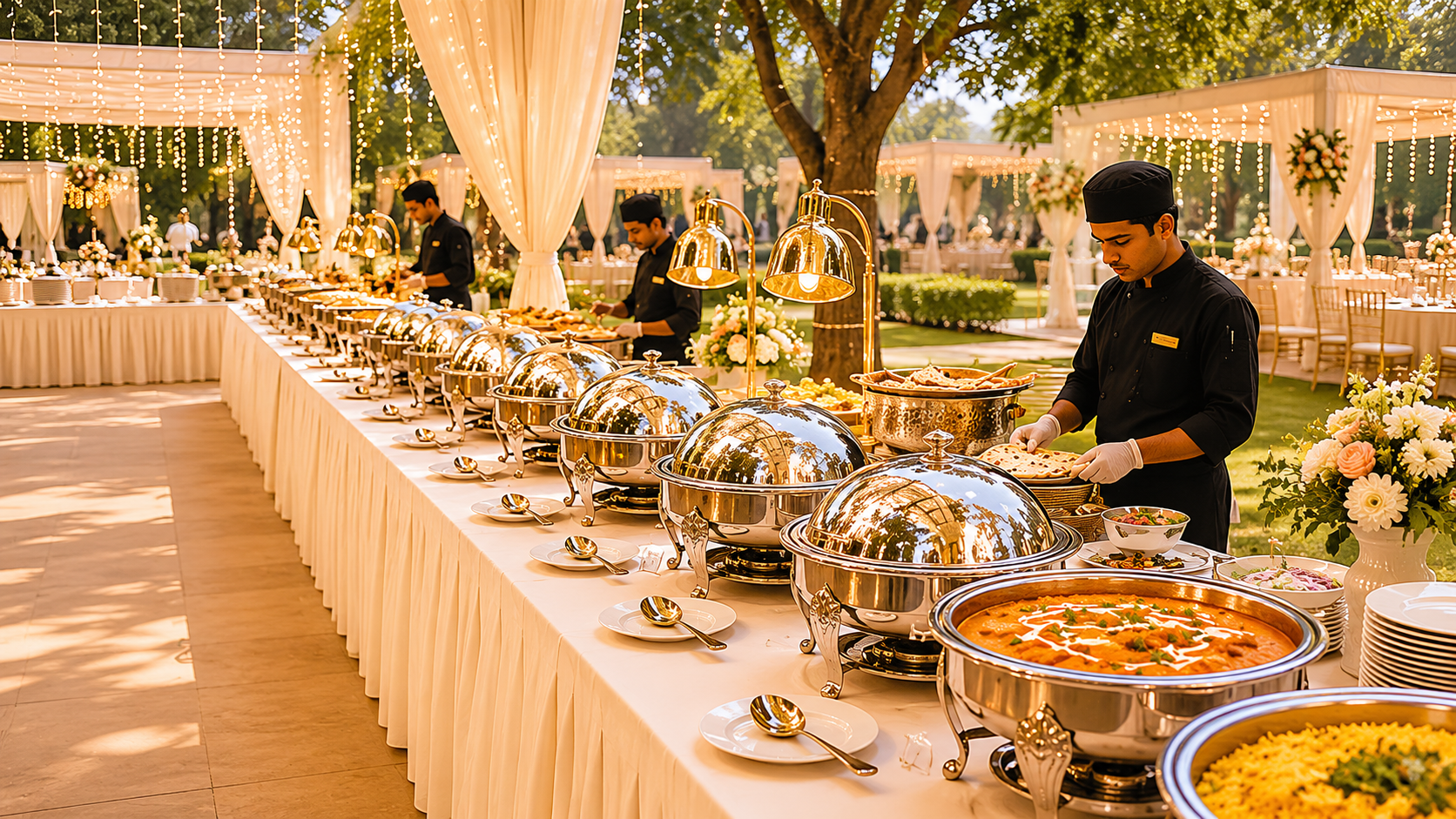
Most caterers require a final headcount confirmation seven to ten days before the wedding, though premium and hotel-based caterers for large events may ask for it two to three weeks out. Any changes after that point typically incur a surcharge of fifteen to twenty-five percent on additional plates, and reductions are often not refunded below a certain percentage of the original quote.
This timeline makes your RSVP deadline critically important. If you want to give your caterer accurate numbers two weeks before the wedding without scrambling, your RSVP deadline needs to be set at four to six weeks before the first event. That gives you two weeks to chase non-responders, update your numbers, and arrive at a final count with enough confidence to commit to it in a catering contract.
With a real-time RSVP dashboard, you can see exactly where you stand at any point in this timeline. Three weeks before the deadline, you know which events still have significant non-responses and where to focus your follow-up effort. One week before the deadline, you have a live number that is as accurate as it is going to get before the wedding, and you can share it with your caterer based on data rather than a best guess.
The Dietary Requirement Dimension
Catering for large Indian weddings in the US is complicated not just by headcount but by dietary requirements, which are particularly varied across Indian communities. Jain guests who require no onion or garlic. Guests who are vegan. Children who need simpler options. Guests with allergies that need to be flagged to the kitchen in advance.
When dietary requirements are collected at the RSVP stage alongside the confirmation, the couple has a complete picture to give their caterer. Not just how many people are coming to each event but how many of those people need specific menu accommodations. This prevents expensive last-minute adjustments on the day and ensures that every guest is actually able to eat what is being served, which matters both financially and as a point of hospitality.
Collecting dietary restrictions manually through a WhatsApp group is an invitation to missed information. Someone messages their requirement and it gets buried. Someone forgets to mention it until the morning of the event. A digital RSVP system that collects this information per guest, per event, as part of the confirmation process gives the caterer a clean, exportable list rather than a collection of messages to cross-reference.
How Indivites Handles This
This is exactly the kind of problem Indivites was built to solve for Indian couples planning weddings abroad. The platform collects per-event RSVPs from every guest, updates headcounts in real time as confirmations come in, and tracks dietary requirements alongside attendance. The couple sees a live dashboard for each function, the mehndi, haldi, sangeet, ceremony, and reception, with an accurate count of who has confirmed, who has declined, and who has not yet responded.
When it is time to finalize numbers for the caterer, that conversation is based on actual data rather than a calculation assembled from different sources. The couple can export the headcount for each event cleanly and share it with vendors, which removes the back-and-forth of manual number-sharing entirely. For a wedding where catering is the largest single budget item, that accuracy is not just convenient. It is the difference between staying on budget and discovering a significant overrun after the fact.
Frequently Asked Questions
How much money can accurate RSVP tracking actually save on catering? At $75 to $150 per plate for Indian wedding catering in the US, a 10% headcount overestimate on a 300-guest event saves between $2,250 and $4,500 per event. Across a multi-event Indian wedding, that saving compounds. Accurate RSVP data is one of the most direct levers a couple has on their catering budget.
When should I give my caterer the final headcount? Most caterers need final numbers seven to ten days before the wedding, and hotel-based caterers for large events may ask for two to three weeks notice. To arrive at accurate numbers by that deadline, set your RSVP deadline four to six weeks before the event so you have time to follow up with non-responders and confirm a number you are confident in.
What happens if more guests show up than I confirmed with the caterer? Most caterers charge a surcharge of fifteen to twenty-five percent on additional plates added after the final headcount is submitted. Some venues have a minimum buffer built into their contracts, but relying on that buffer rather than accurate tracking is an expensive habit. Real-time RSVP tracking reduces the gap between your confirmed count and actual attendance significantly.
Should I collect dietary requirements through the same RSVP system? Yes, and doing so saves time and prevents gaps. When dietary requirements are collected at the same moment as the RSVP confirmation, you end up with a complete picture of both headcount and menu requirements per event that you can share with your caterer as a single clean document rather than cross-referencing multiple messages.
How does Indivites help with catering accuracy specifically? Indivites tracks RSVPs per event in real time, so you always have a live headcount for each function rather than an estimate built from scattered confirmations. Dietary requirements are collected alongside attendance at the RSVP stage. When the catering conversation happens, the couple shares accurate, per-event numbers from a dashboard rather than assembling them manually, which removes the most common source of budget overruns in large Indian wedding catering.
What if guests confirm and then do not show up on the day? A no-show rate of five to ten percent is normal at Indian weddings, and most experienced caterers factor this in. With accurate RSVP data, you can negotiate your catering contract with a realistic buffer rather than inflating the estimate yourself to cover uncertainty. Knowing your confirmed count with precision gives you a better starting point for that conversation.