
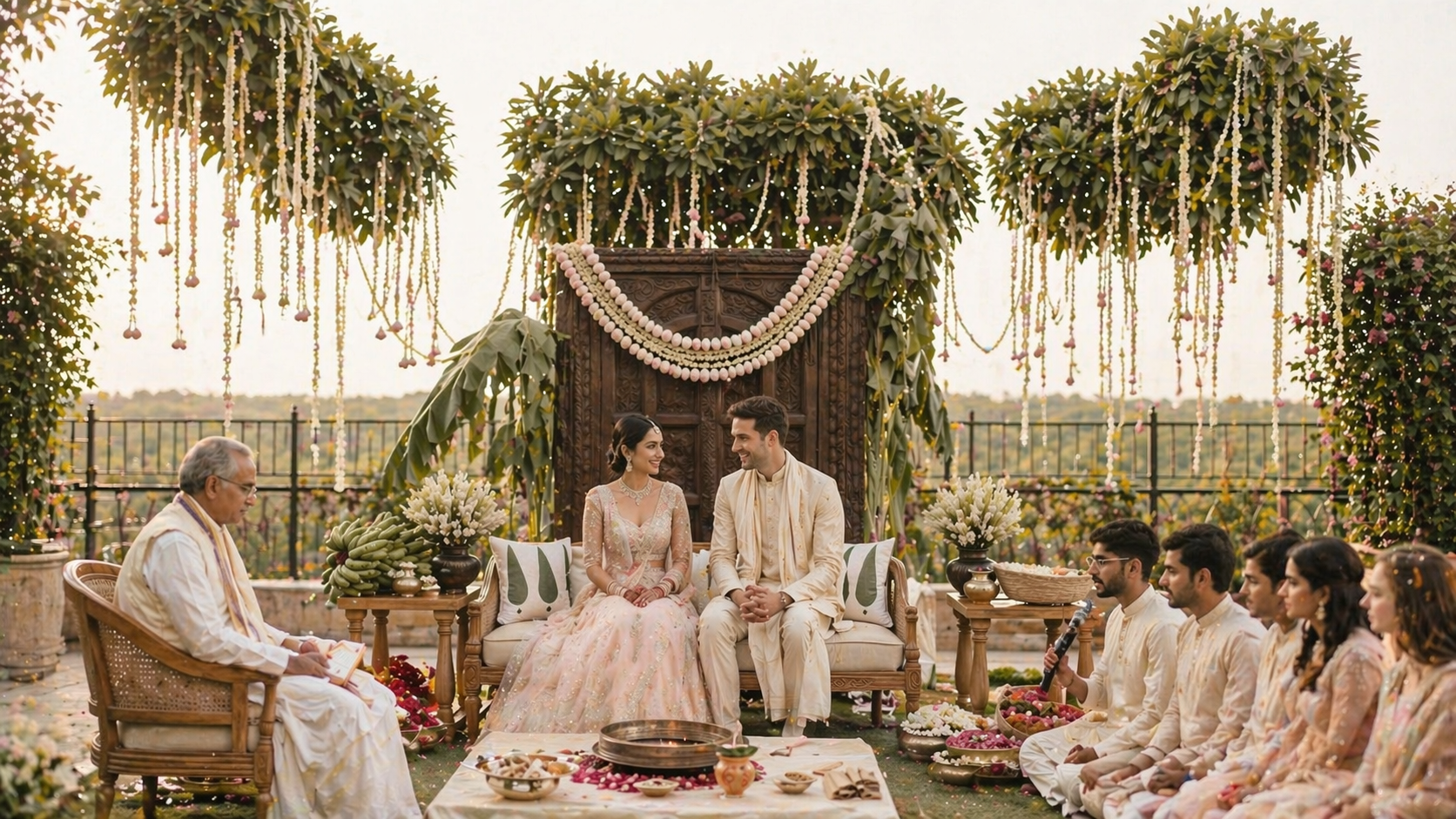
So you have been invited to your first Indian wedding. Congratulations, because you are in for one of the warmest, loudest, most colourful celebrations you will ever attend. If you are feeling a little unsure about what to expect, what to wear, or how to behave, that is completely normal. Indian weddings are rich with tradition, and a little preparation will help you relax and enjoy every moment instead of worrying about getting something wrong. This guide walks you through everything a first-time guest needs to know.
The most important thing to understand from the start is that an Indian wedding is rarely a single event. It is usually several celebrations spread across two to five days, each with its own mood, its own meaning, and sometimes its own guest list. So the first step is simply to read your invitation carefully and find out which events you are invited to.
An Indian Wedding Is Many Celebrations Not One Day
A Western wedding tends to centre on one main day. An Indian wedding is built differently. It is a series of functions, and you may be invited to all of them or only some, depending on how close you are to the couple and the families.
Here are the events you are most likely to come across.
Function
What it is
The mood
Haldi
A turmeric paste is applied to the couple for blessings and glow
Playful, intimate, usually close family
Mehndi
Henna is applied to the bride and the women guests
Relaxed, social, lots of colour
Sangeet
A night of music, dancing, and performances
Joyful and high energy, like a big party
Wedding ceremony
The main religious ceremony where the couple marries
Sacred and emotional, the heart of it all
Reception
The formal celebration and dinner
Elegant, the largest gathering
You do not need to memorise all of this. Just check which functions your invitation names, since being invited to the reception does not always mean you are invited to the smaller, more private events like the haldi. This is completely normal and not a slight. The intimate functions are often kept to close family and friends.
What To Wear So You Feel Part Of It
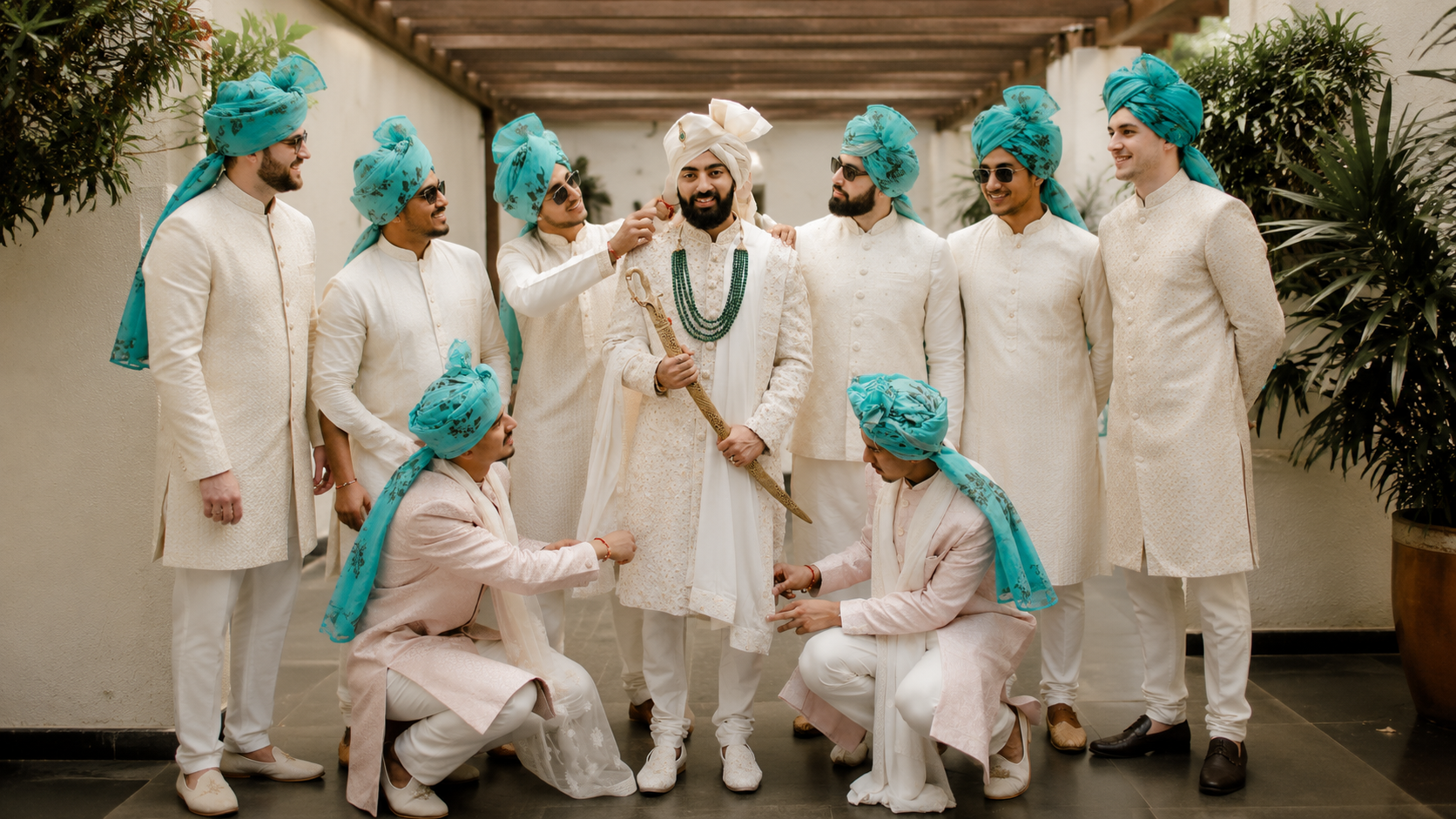
Indian weddings are a celebration of colour, so leave your quiet neutrals at home and enjoy dressing up. Bright and rich colours are welcome and encouraged. There are really only two firm rules to remember.
First, avoid wearing red, especially to the main ceremony, because red is traditionally the bride's colour in many Indian weddings. Second, avoid plain white or all black, as these can carry associations with mourning in some communities. Beyond that, you have freedom. You can wear Indian clothing such as a saree, a lehenga, or a kurta if you would like to, and your hosts will usually be delighted that you made the effort. If you prefer Western formal wear, a colourful outfit works beautifully too.
Different functions can call for different levels of formality. The mehndi or haldi may be more relaxed, while the reception is dressy. If you are ever unsure, it is perfectly fine to ask the couple or another guest what they are planning to wear.
Why The Timings Are More Relaxed Than You Expect
It helps to arrive with a relaxed sense of time. Indian weddings often run on what people affectionately call Indian Standard Time, which means events can start later than printed and run longer than expected. The ceremony in particular can last quite a while, sometimes a couple of hours, because each ritual carries meaning.
Bring your patience and your curiosity. You do not need to understand every ritual to appreciate it. Watching how the families participate, and asking a friendly neighbour what something means, is part of the joy. Nobody expects a first-time guest to know everything, and most families love explaining their traditions to someone who is genuinely interested.
Gifts And The Tradition Of Giving Shagun

In many Western weddings, guests choose from a registry. Indian weddings often follow a different custom called Shagun, which is a gift of money given in an envelope as a blessing for the couple. The amount is personal and there is no fixed rule, though many people avoid round numbers and add one rupee or one dollar, so the total ends in a one, such as 101 or 51. This is considered auspicious, a sign of continued growth.
If the couple lives abroad and has shared a digital way to send Shagun or a gift, that is increasingly common and completely acceptable, especially for guests who cannot attend in person. Platforms made for Indian families, such as Indivites, now let guests send Shagun online so a relative far away can still take part in the tradition. If you are unsure what is expected, it is always fine to ask someone close to the family.
How To Be A Warm And Welcome Guest
The simplest advice is to join in. Indian weddings are participatory, not something you watch from the side. If there is dancing at the sangeet, dance, even if you do not know the steps. If you are offered food, accept it, because feeding guests generously is a deep part of the hospitality. Expect to eat very well and very often.
A few small courtesies go a long way. Greet elders warmly, as they are treated with great respect. Take your cues from those around you during the religious ceremony, standing or sitting as others do. Remove your shoes if you see others doing so before entering a ceremony space or a home. And take lots of photos, but follow any guidance the couple gives about the more sacred moments.
Relax Because You Really Cannot Get It Wrong
The truth about attending your first Indian wedding is that you cannot really get it wrong if you arrive with an open heart and a willingness to join in. The families want you there, they want you fed, and they want you on the dance floor. Everything else is detailed.
Read your invitation, wear something colourful, bring your patience, and let yourself be swept up in it. By the end of the celebration, you will understand why people who grow up with these weddings carry them in their hearts for the rest of their lives.
Frequently Asked Questions
1. What should I wear to an Indian wedding as a guest? Wear bright, rich colours and feel free to dress up. Avoid red, since it is traditionally the bride's colour, and avoid plain white or all black. Indian outfits like a saree, lehenga, or kurta are welcome, and a colourful Western formal outfit works too.
2. Do I have to attend every function of an Indian wedding? No. An Indian wedding spans several functions across two to five days, and you may be invited to all or only some. Being invited to the reception does not always mean you are invited to smaller, private events like the haldi, which is completely normal.
3. What gift should I bring to an Indian wedding? Many Indian weddings follow the custom of Shagun, a gift of money given in an envelope as a blessing. There is no fixed amount, though people often make the total end in one, such as 51 or 101, which is considered auspicious.
4. How do I know which events I am invited to? Read your invitation carefully, as it will name the functions you are welcome at. On modern platforms like Indivites, each guest sees only the events they are personally invited to, so it is clear exactly where you are expected.
5. Can I send a gift if I cannot attend the wedding in person? Yes. If the couple lives abroad and has shared a digital option, you can send Shagun or a gift online. Platforms made for Indian families, such as Indivites, let guests send Shagun digitally so you can take part even from far away.