

Planning a wedding today isn't just about choosing a venue or sending invitations. It's about managing people, information, and expectations, often across cities, countries, and cultures. For couples in the US, especially Indian couples or those planning multicultural weddings, a wedding website becomes the central hub of everything. It's where your guests go for clarity, updates, and reassurance.
The real challenge isn't creating the website, but knowing what to include so that it actually makes life easier for both you and your guests. This checklist will help you build a wedding website that's clear, complete, and genuinely useful.
Start with the core information
Every good wedding website begins with the basics, and this is where you should focus first. Your website should clearly introduce you as a couple, include your wedding dates, and provide a simple welcome message that sets the tone. Along with this, your event schedule should be presented in a way that's easy to understand at a glance, especially if you're hosting multiple functions like Mehendi, Sangeet, Ceremony, or Reception.
Each event should include clear timings, locations, and any relevant dress code information. Venue details are equally important, and you should provide full addresses along with map links and any specific instructions such as parking or entry details. This entire section should feel simple, structured, and easy to navigate so that guests can quickly find the most important information without confusion.
Make RSVPs simple and clear
One of the biggest advantages of having a wedding website is the ability to manage guest responses efficiently. Your RSVP section should be designed in a way that lets guests confirm their attendance easily without any back-and-forth communication. If your wedding includes multiple events, it helps to let guests respond to each function individually so you have a clearer understanding of attendance across different days.
You can also collect additional details such as meal preferences or special notes if needed. A well-organized RSVP system not only saves you time but also gives you a clear and accurate picture of your guest list, helping you plan everything else more effectively.
Help guests plan their travel

For weddings in the US, especially when guests are traveling from different states or countries, providing travel-related information becomes essential. Your website should include accommodation details such as recommended hotels, group booking options, or discount codes if available. This makes it easier for guests to plan their stay without having to search on their own.
In addition to that, you should provide clear travel guidance, including the nearest airport, transportation options, and approximate travel time to the venue. If you've arranged shuttle services or group transport, include those details as well. This section is particularly helpful for Indian families or international guests who may not be familiar with local logistics.
Add cultural context for a better experience
If your wedding includes Indian traditions or a mix of cultures, not all guests will know what to expect. This is where your wedding website can help bridge that gap. Instead of simply mentioning dress codes, you should explain them in a way that makes sense to everyone, including whether Indian attire is encouraged, optional, or required for certain events.
You can also suggest colors or styles to guide guests. Additionally, providing short descriptions of each event, such as what happens during a Sangeet or how the ceremony will take place, helps guests feel more comfortable and involved. This not only avoids confusion but also makes the experience more inclusive for everyone attending.
Make it personal without overdoing it
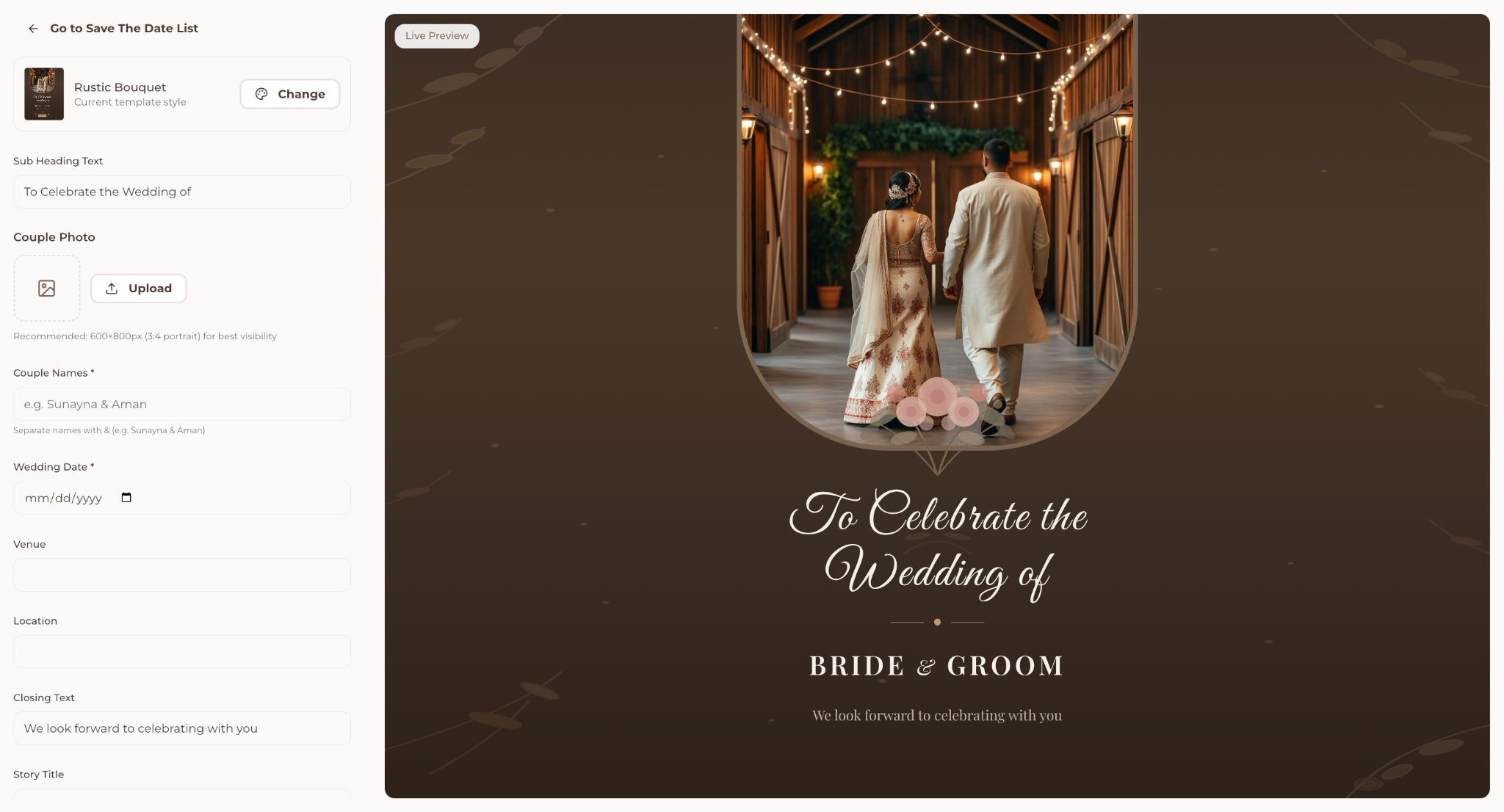
Your wedding website should feel like an extension of you as a couple, but it shouldn't overwhelm guests with too much content. Including a short and genuine story about how you met or your journey together adds warmth and personality to the website. You can also include a few meaningful photos to make it visually engaging.
That said, it helps to keep this section balanced and not overly detailed, since the main purpose of the website is still to provide useful information. A simple and thoughtful approach works best in making the website feel personal without making it heavy.
Answer questions before they're asked
Guests often have similar questions, and addressing them in advance can save you a lot of time and effort. Including a well-thought-out FAQ section lets you answer common queries such as arrival times, dress codes, plus-one policies, and any cultural etiquette guests should be aware of.
This reduces the need for repeated calls or messages and ensures that guests have access to clear information whenever they need it. A good FAQ section makes your website more practical and helps everything run more smoothly.
Include helpful extras
While not essential, a few additional sections can enhance the overall experience for your guests. If you have a gift registry, you can include it in a simple and optional way so guests can access it easily if they wish. Providing contact details for a friend, family member, or wedding planner instead of yourself can also help manage queries without overwhelming you.
Additionally, having a section for updates ensures that any last-minute changes to schedules or venues can be communicated clearly. These extras make your website more complete and reduce the chances of confusion.
Keep it clear, not complicated
It's easy to overcomplicate a wedding website by adding too much information or unnecessary sections. The focus should always be on clarity and structure so that guests can find what they need quickly. Avoid repeating information or creating cluttered layouts, and instead aim for a clean and simple design.
A well-organized website is far more useful than one that tries to include everything but ends up being difficult to navigate. Simplicity ensures that your website remains functional and easy to use for all guests.
Think like a guest
The most effective way to evaluate your wedding website is to think from your guest's perspective. Every guest is trying to answer a few simple questions, such as where they need to be, when they need to be there, and what they need to know before arriving.
If your website clearly answers these questions, it's doing its job well. Keeping this perspective in mind helps you focus on what truly matters rather than getting lost in unnecessary details.
A website that actually works
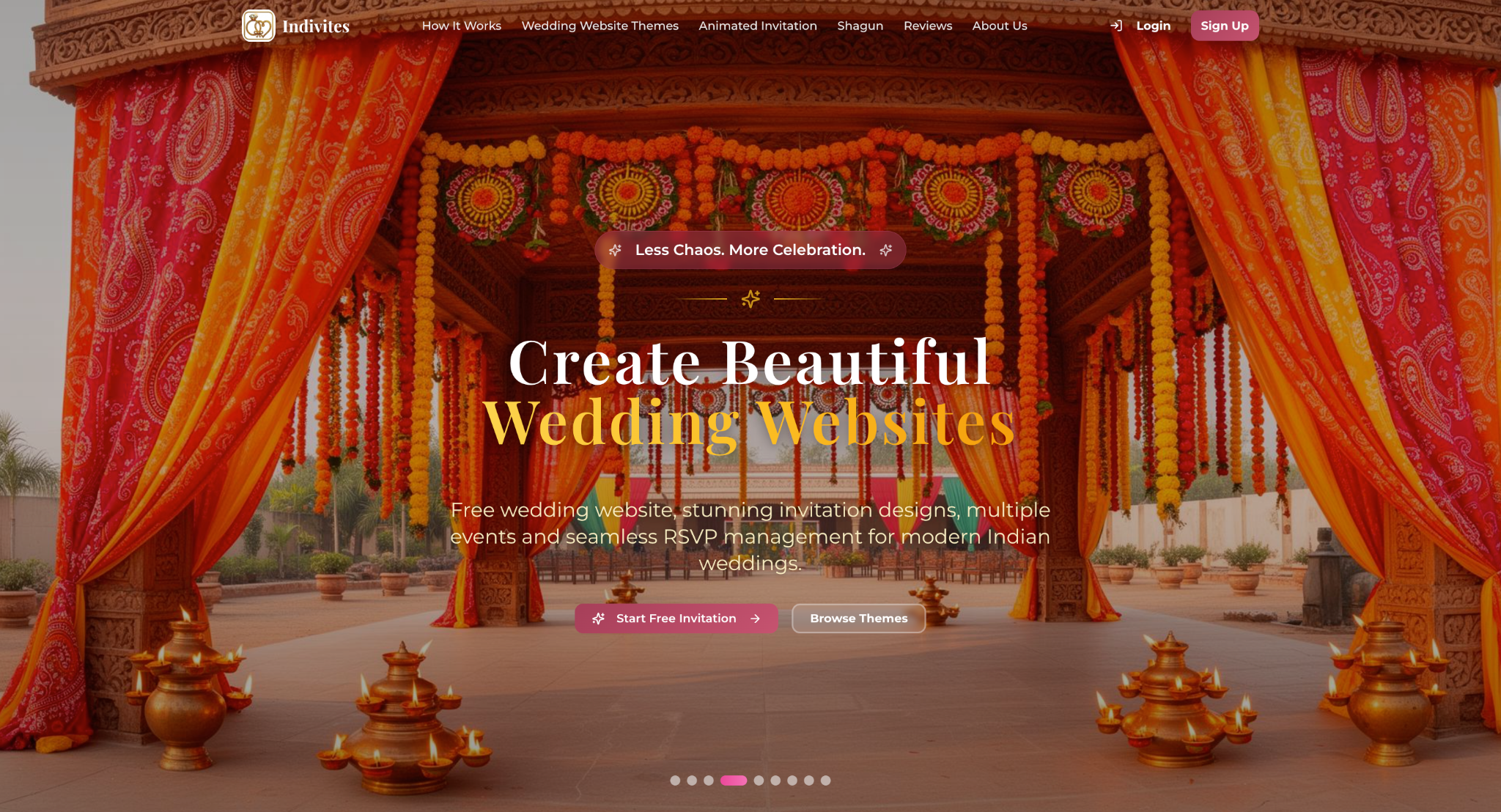
A wedding website isn't just a digital addition. It's a practical tool that simplifies planning and improves communication. For Indian weddings in the US, where multiple events and travel logistics are involved, it becomes even more valuable.
The most effective wedding websites aren't the most elaborate ones, but the ones that are clear, thoughtful, and built with the guest in mind. When done right, it reduces stress for you and creates a better experience for everyone attending.
Frequently asked questions
Do I need a wedding website if I'm already sending invitations?
Yes. Traditional invitations are great for announcing your wedding, but they're limited in what they can communicate. A wedding website acts as your central hub where guests can find updated schedules, venue details, travel information, and RSVP options.
Can I use both digital and printed invitations together?
Absolutely. Many couples choose a hybrid approach, combining printed invitations for tradition with digital tools for convenience.
How early should I create my wedding website?
Ideally, 4 to 6 months before your wedding, so guests have enough time to plan and RSVP.
What if some guests are not comfortable using a website?
You can assist them personally while still using your website as the main source of information.
Should I include every detail about the wedding on the website?
No. Focus on essential and helpful information to keep it clear and easy to navigate.
How does a platform like Indivites make this process easier?
Platforms like Indivites bring everything into one place, helping you manage event details, RSVPs, and guest communication efficiently.