
There is a moment that happens at almost every Indian wedding reception. The couple sits on stage, relatives queue up one by one, and envelopes change hands across the room. Some envelopes are fat and beautifully designed, some are thin and hastily picked up from the nearest stationery shop, and a few get dropped in the crowd or quietly misplaced in the chaos of the evening. By the end of the night, there is a pile of envelopes sitting somewhere that nobody is fully sure is safe, and the couple is too exhausted to even look at them until the next morning.
This is Shagun, one of the most emotionally loaded rituals in Indian wedding culture, and for all its beauty and meaning, the physical envelope has always come with its own headaches. That is changing now, slowly and then all at once, as digital Shagun enters the conversation not as a replacement for tradition but as a genuine upgrade to how that tradition actually works in the world today.
What Shagun Actually Means and Why It Has Always Mattered
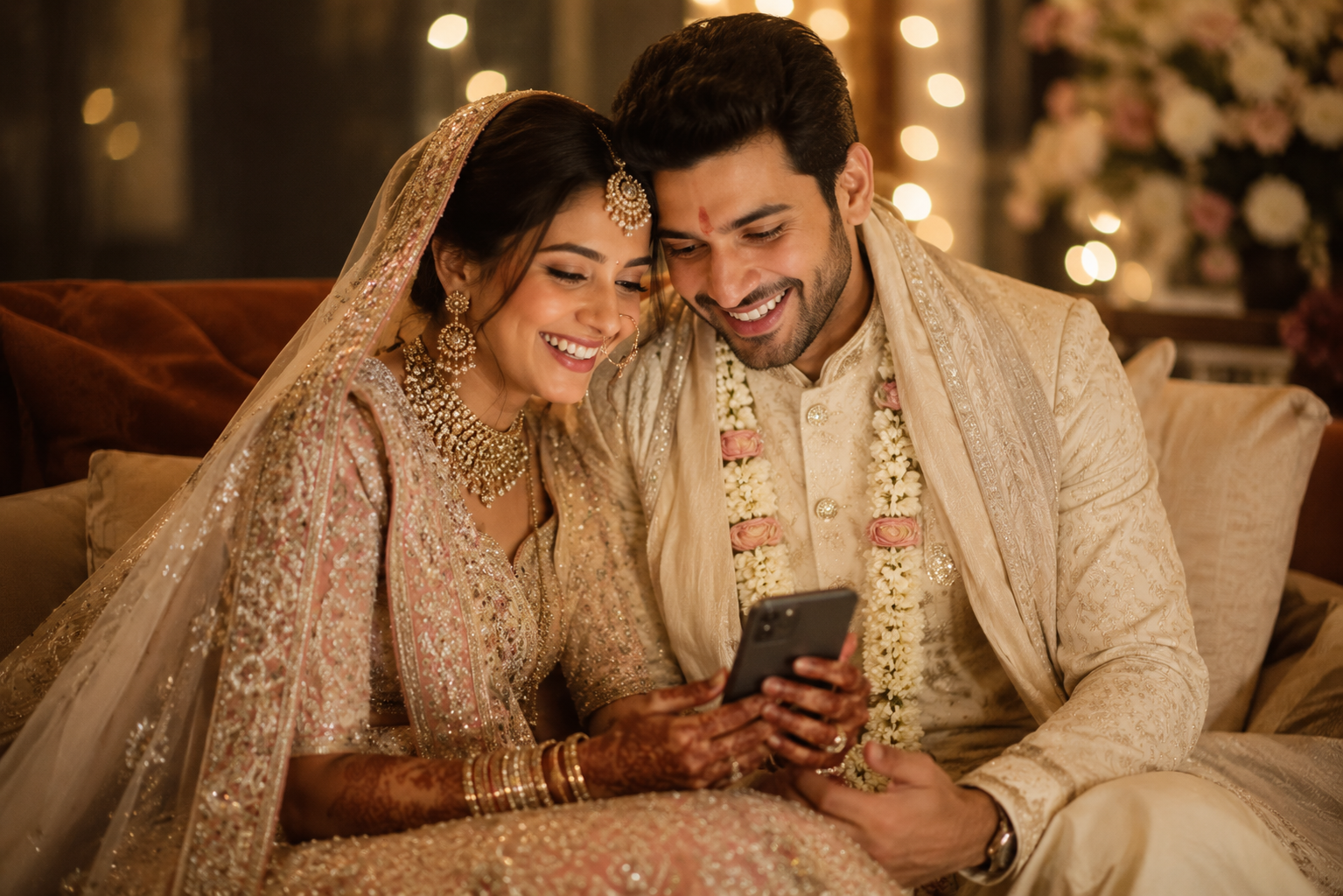
Shagun is not just a cash gift and it was never meant to be understood that way. The word itself means auspiciousness, and when someone gives Shagun at an Indian wedding, they are offering a blessing more than they are handing over money. That is why the tradition of adding the number 1 to any amount exists across so many communities. You give 501, not 500, and you give 1001, not 1000, because that extra unit is not about the money at all. It is a symbol of prosperity continuing to grow, of the gift never being exhausted, of a blessing that carries forward into the couple's new life together.
Around 82% of guests at Indian weddings prefer giving money rather than physical gifts, which tells you how deeply Shagun is embedded in the culture across every region, every community, and every generation. Even when the envelope designs change or the amounts shift based on relationship and occasion, the core meaning stays exactly the same. But Indian weddings are no longer happening in one city, one country, or even one time zone, and that is where the story starts to get complicated.
The Problem Nobody Talks About Openly
When a family based in New Jersey or London or Melbourne plans a wedding, their guest list looks nothing like their grandparents' guest list did. There are aunts flying in from three different countries, friends watching the live stream from Singapore, and cousins in Canada who could not get leave from work but desperately want to feel part of the moment. For guests who show up in person, the physical Shagun envelope works fine. But for everyone watching from a screen or unable to travel, there has historically been no clean or graceful way to participate in this ritual.
They either arrange a bank transfer that feels cold and transactional, send a WhatsApp message promising to give when they meet next, or skip it entirely and carry a quiet guilt about it for months. This is not a small inconvenience but a real emotional gap, because Shagun is not just about money reaching the couple. It is about the gesture of being present even when you physically cannot be there, and without the right infrastructure, that gesture gets lost entirely.
Why Digital Shagun Makes Sense Right Now
The argument for digital Shagun is not really a technology argument at its heart. It is a cultural one. Research indicates that 50% of weddings today incorporate some form of virtual element to make them more accessible to family members living abroad, and when half your guests are participating remotely in any capacity, you need a way to let them do everything an in-person guest does, including give Shagun with the same warmth and intention they would bring if they were standing in that reception hall.
Around 20% of Indian weddings now incorporate QR codes or digital payment options specifically for Shagun, and that number is growing steadily. The couples getting married today are the same generation that grew up with UPI, PayPal, and digital wallets as completely normal parts of daily life. For them, receiving a Shagun digitally does not feel like a compromise. The question is simply whether the experience is designed with enough care and beauty to carry the emotional weight the tradition deserves, because a plain bank transfer is not Shagun. A digital gifting experience that looks and feels as considered as a well-crafted physical envelope, one that carries the visual and emotional language of the occasion, that is Shagun in its truest form.
What Makes a Digital Shagun Experience Feel Right
Not every digital payment experience qualifies as digital Shagun, and the difference lies entirely in how it is built and how it feels to use. A good digital Shagun experience should feel like an occasion rather than a transaction. When a guest in London opens their laptop on the morning of the wedding and sends their blessings digitally, that moment should carry real warmth. It should give them space to add a personal note and make them feel like they have genuinely participated in something meaningful rather than just completed a form.
The presentation layer matters enormously. From beautifully designed digital gifting envelopes to interfaces that reflect the aesthetic of the wedding itself, the visual experience of giving Shagun digitally needs to carry the same dignity as the physical version. If a guest feels like they are making a bank
payment, something has gone wrong with the design. If they feel like they are sending a blessing, it has been done right. It also needs to be easy enough for every generation to use without frustration, because digital Shagun only works if guests actually go through with it. The fewer the steps between the intention to give and the act of giving, the more likely that intention becomes action.
The Diaspora Dimension That Changes Everything
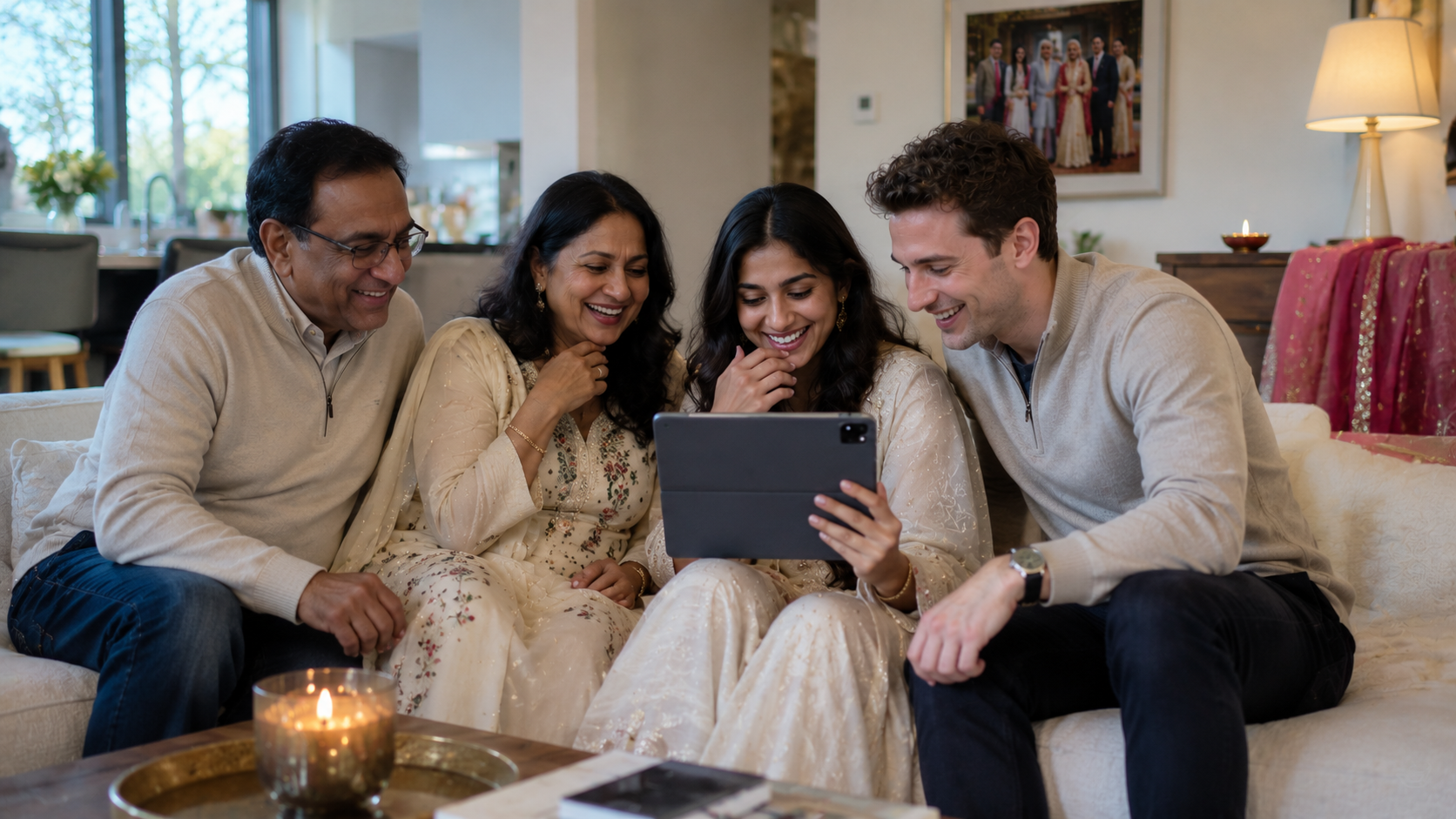
For Indian families living outside India, the emotional stakes of every wedding ritual are actually higher than they might appear. When you are surrounded by a different culture every day, your own rituals become more precious to you. You hold onto them more deliberately and want them to feel exactly right when they do happen, which is why diaspora weddings often involve an incredible level of care around every tradition.
Indian families across the US, UK, Canada, and Australia navigate two cultural frameworks at once, balancing traditional Indian gifting values like Shagun and auspicious numbers alongside Western norms of registries and flexible gifting. But this navigation does not mean they want to abandon one system for the other. They want both, and they want to give Shagun with the same emotional weight it has always carried, just through a method that works across borders and time zones. Digital Shagun solves this perfectly because it does not ask anyone to change the tradition at all. It simply removes the physical friction that was never part of the tradition's meaning anyway. The envelope was always just the container. The blessing inside it was always the point.
What the Couple Actually Gains
From the couple's side, digital Shagun solves problems that physical envelopes could never address. At a wedding with three or four hundred guests spread across a sangeet, mehndi, and reception, managing physical envelopes is genuinely chaotic. Envelopes get collected by different family members, stored in different places, and sometimes counted days after the wedding when the couple has already moved into the haze of their honeymoon. There is no clean record of who gave what, and that matters both practically and emotionally because the couple genuinely wants to acknowledge every person who blessed them.
Digital Shagun creates that record automatically. The couple can see every gift, every message, and every name without sorting through a pile of envelopes at midnight after an eight-hour wedding. A guest who would have sent a vague WhatsApp promise to give later will complete a clean digital Shagun experience in the moment, because the friction of figuring out international transfers has been removed and the intention can become action before the feeling fades. A thoughtful platform also allows guests to direct their gift to the couple or to either set of parents, honoring the full social fabric of the wedding rather than flattening it.
The Emotional Core of the Whole Thing
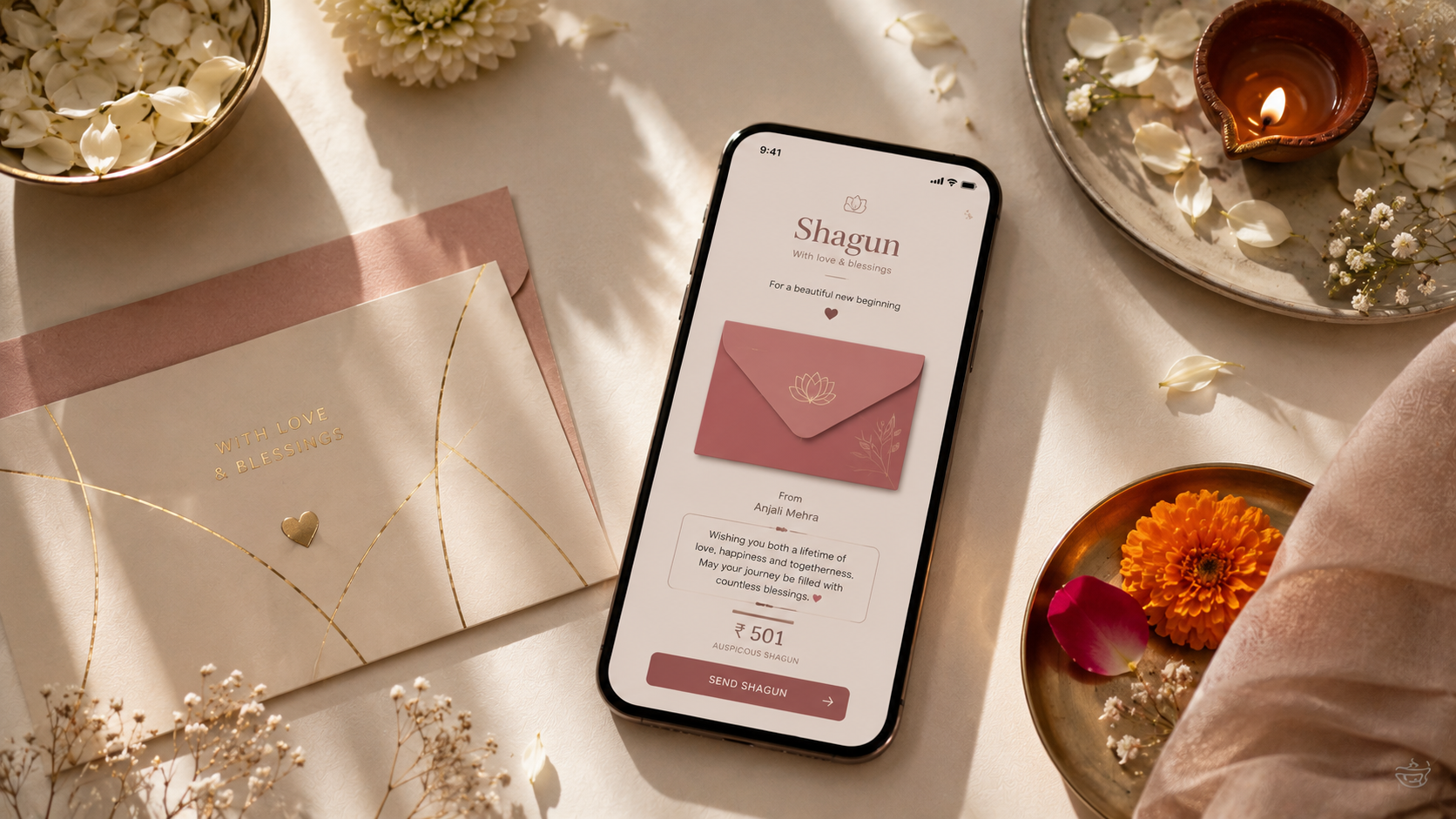
Here is what this is really about when you strip everything else away. An aunt in Sydney has known the bride since she was born. She has been counting down to this wedding for two years. She could not fly over because of health, or cost, or timing, or all three at once. She watches the ceremony on her laptop at six in the morning and cries during the pheras and wants more than anything to give her blessing in the way her culture has always given it, with Shagun, with an auspicious number, with a note that says exactly what she cannot say out loud because she is not in the room.
Without digital Shagun, she sends a message and means to arrange a transfer and forgets in the chaos of her week and feels a quiet, low-grade guilt about it for the next six months. With digital Shagun, she opens a beautifully designed experience, chooses her amount, writes her note, and sends her blessing in the exact moment she feels it. The couple sees her name. They feel her presence even across twelve thousand miles.
That is the whole point, and it always was. Shagun was never about the envelope. It was about the blessing inside it, and digital Shagun exists simply to make sure that blessing can travel as far as the people who want to give it.
Frequently Asked Questions
What is digital Shagun and how is it different from a regular bank transfer?
Digital Shagun is a purpose-built gifting experience designed to carry the emotional weight of the Shagun tradition, not just move money. It includes beautifully designed gifting envelopes, space for a personal blessing or note, and the ability to direct the gift to the couple or their parents, making the gesture feel like the ritual it is meant to be rather than a financial transaction.
Can guests outside India give Shagun digitally without worrying about currency conversion?
A well-built digital Shagun platform handles the payment logistics so guests do not have to think about it. Guests in the US, UK, Canada, or Australia should be able to give in their local currency through a method they are already comfortable with, without needing to set up international transfers or navigate unfamiliar systems.
Is digital Shagun appropriate for traditional or elder-led families?
Digital Shagun works best as a complement to physical Shagun rather than a replacement. For guests who are physically present, the physical envelope remains entirely appropriate and meaningful. Digital Shagun is most valuable for guests who cannot attend in person and would otherwise have no graceful way to participate in this ritual.
Can guests give Shagun to the bride's parents or groom's parents rather than just the couple?
A thoughtful digital Shagun platform should allow guests to direct their gift appropriately, whether to the couple, the bride's family, or the groom's family. This matters because in Indian wedding culture, Shagun is often a gesture between families and not just between a guest and the couple.
How does the couple keep track of who gave digital Shagun?
Every gift is automatically recorded with the giver's name, the amount, the message they left, and who it was directed to. The couple gets a complete, organized record without sorting through hundreds of physical envelopes or trying to remember who gave what amid the chaos of a multi-day celebration.
Does Indivites work for NRI couples with guests in multiple countries?
Indivites was built for this exact situation. If you are planning a wedding in the US, UK, Canada, or
Australia with guests spread across multiple countries and time zones, the platform lets you manage digital invitations, event-specific RSVPs, and digital Shagun all in one place. Guests can participate from wherever they are without dealing with complicated payment setups or currency confusion.